Three-Year-Old Gets Rare Brain Tumour Transplant in India
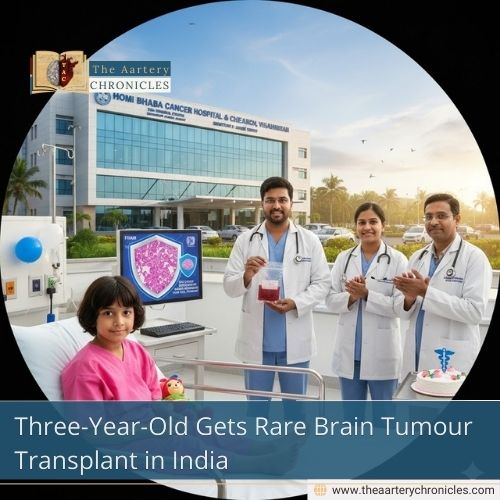
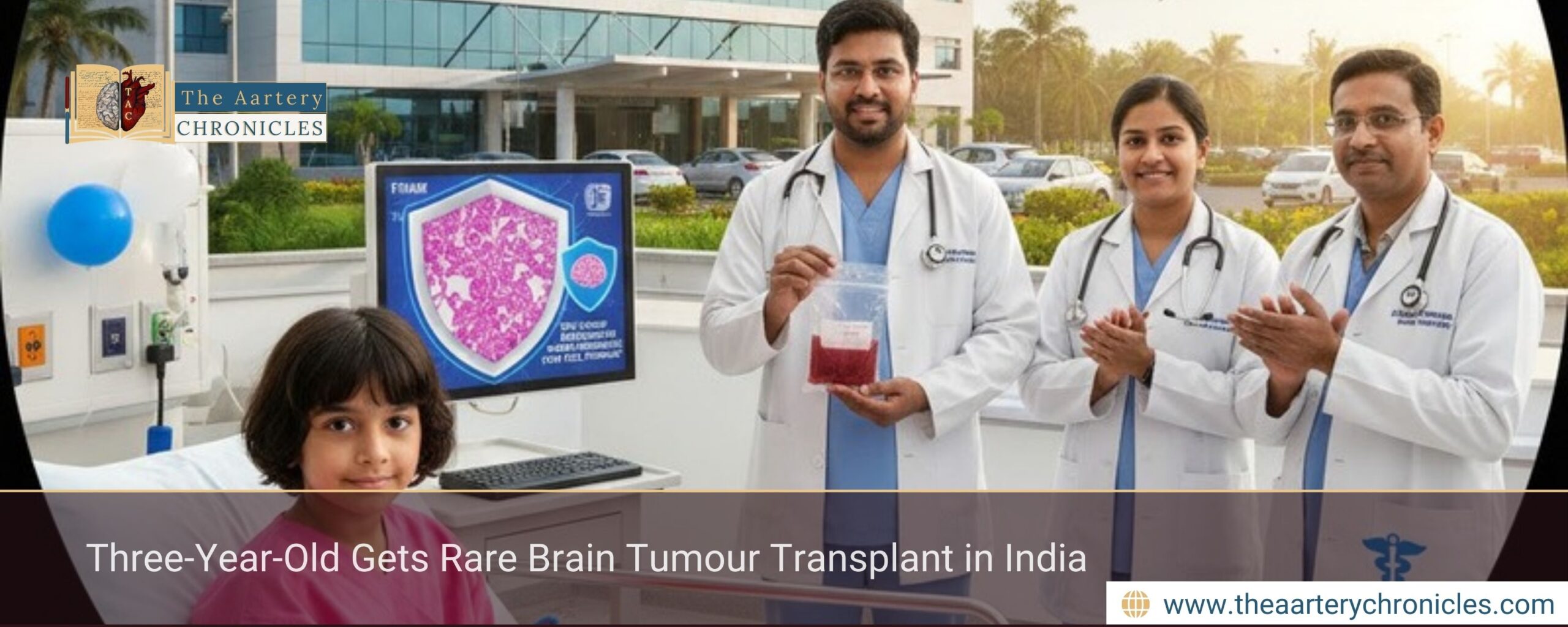
India has marked a major step in pediatric cancer care with its first reported Tandem Autologous Stem Cell Transplant for a child diagnosed with Embryonal Tumour with Multilayered Rosettes. Doctors performed the complex procedure on a three-year-old girl from Andhra Pradesh. This rare brain tumour mainly affects very young children and often progresses quickly. The successful use of Tandem Autologous Stem Cell Transplant now offers new hope for selected high-risk cases.
The treatment took place at Homi Bhabha Cancer Hospital and Research Centre in Visakhapatnam, which functions under Tata Memorial Centre and the Department of Atomic Energy.
What Makes Embryonal Tumour with Multilayered Rosettes So Serious
Embryonal Tumour with Multilayered Rosettes, also known as ETMR, is among the rarest and most aggressive brain tumours seen in early childhood. Doctors usually treat it with surgery followed by strong chemotherapy. However, even with standard treatment, long-term survival remains limited because the tumour tends to grow rapidly.
For this reason, cancer specialists often consider more intensive treatment plans in carefully selected children.
What is a Tandem Autologous Stem Cell Transplant
A Tandem Autologous Stem Cell Transplant involves two planned cycles of very high-dose chemotherapy. After each cycle, doctors reinfuse the child’s own previously collected stem cells. These stem cells help restore the bone marrow, which produces blood cells and gets damaged during high-dose chemotherapy.
Doctors complete this two-step process over several months, usually within six months. The goal is to destroy remaining cancer cells more effectively and achieve longer remission.
How Doctors Treated the Child
The child first underwent brain surgery and intensive chemotherapy at the Tata Memorial Centre in Mumbai. Later, doctors referred her to the Visakhapatnam centre for advanced care closer to home.
Between December 2025 and January 2026, the medical team administered additional chemotherapy and carried out the double transplant procedure. Doctors discharged the child after the second transplant without major transplant-related complications.
Specialists continue to monitor her closely because early detection and management of side effects remain essential during such intensive treatment.
Team-Based Care Is Critical
ETMR remains a challenging diagnosis. However, studies show that aggressive chemotherapy followed by Tandem Autologous Stem Cell Transplant can improve survival in selected patients. Research reports suggest that five-year survival may reach about 50 to 60 per cent in carefully chosen cases.
Doctors stress that this treatment does not suit every child. Medical teams must evaluate each case individually before recommending such an intensive approach.
Conclusion
Although ETMR remains an aggressive disease, this case shows that advanced therapies such as Tandem Autologous Stem Cell Transplant are now available within India. For families facing rare childhood cancers, access to such specialised treatment closer to home offers both medical and emotional relief.
Doctors continue to emphasise early diagnosis, referral to specialised centres, and structured follow-up care to improve long-term outcomes in children with rare brain tumours.
Source: Inputs from various media Sources

I’m a pharmacist with a strong background in health sciences. I hold a BSc from Delhi University and a pharmacy degree from PDM University. I write articles and daily health news while interviewing doctors to bring you the latest insights. In my free time, you’ll find me at the gym or lost in a sci-fi novel.
- Priya Bairagi
- Health News and Updates,People Forum
- 25 February 2026
- 09:00