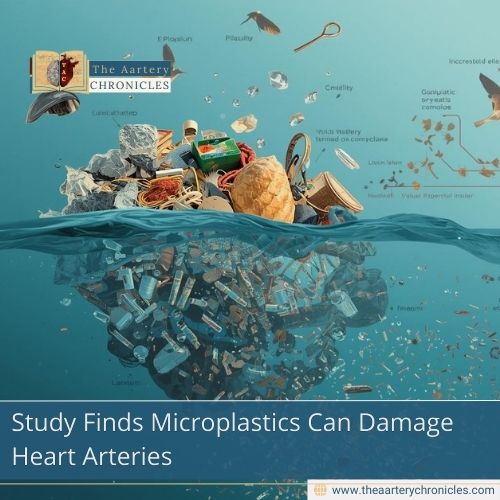

Study Finds Microplastics Can Damage Heart Arteries
Microplastics heart disease risk from could be more serious than previously believed, especially for men, according to new scientific research. A recent study suggests that tiny plastic particles commonly found in food, water, and air may directly damage blood vessels and speed up the development of heart disease even in people who otherwise appear healthy.
What Are Microplastics and Why Are They a Problem?
Microplastics are extremely small plastic fragments, ranging from microscopic particles to pieces about the size of a grain of rice. Because plastics break down but never fully disappear, these particles are now widespread in the environment.
As a result, people are exposed daily through:
- Drinking water
- Packaged and processed foods
- Seafood
- Airborne dust
Research has already shown that microplastics can enter the bloodstream and settle in organs, including the heart and blood vessels. They have been linked to hormone disruption, fertility problems, inflammation, and nerve damage. However, their direct role in heart disease has remained unclear until now.
New Study Shows Direct Damage to Arteries
In the latest laboratory study, researchers examined how microplastics affect mice that were genetically prone to atherosclerosis, a condition where fatty plaques build up inside arteries and restrict blood flow.
Importantly, the mice:
- Ate a low-fat, low-cholesterol diet
- Did not gain weight
- Had normal cholesterol levels
Despite this, mice exposed to microplastics showed clear signs of artery damage. The amount of microplastics used reflected levels humans could realistically consume through contaminated food and water.
Men May Be More Vulnerable Than Women
One of the most striking findings was a big sex-based difference.
Male mice exposed to microplastics developed severe artery plaque:
- Plaque increased by over 60% in major heart arteries
- In another key artery, plaque buildup increased more than sevenfold
In contrast, female mice exposed to the same conditions showed no significant increase in plaque formation.
This suggests that microplastics’ heart disease risk may affect males more strongly, possibly due to biological or hormonal differences. Researchers believe this insight could help identify protective factors that may one day guide prevention strategies.
How Do Microplastics Harm Blood Vessels?
Further investigation revealed that microplastics interfere with endothelial cells, which line the inside of blood vessels and help regulate blood flow and inflammation.
When these cells are damaged:
- Inflammation increases
- Arteries become more vulnerable
- Plaque formation accelerates
Because endothelial cells are the first to encounter circulating microplastics, their dysfunction may trigger heart disease even in the absence of traditional risk factors like obesity or high cholesterol.
Can the Body Get Rid of Microplastics?
Currently, there is no proven way to remove microplastics once they accumulate in the body. This makes prevention and overall heart protection especially important.
Health experts advise focusing on:
- Heart-healthy diets rich in whole foods
- Regular physical activity
- Avoiding smoking
- Controlling blood pressure, sugar, and cholesterol
While complete avoidance of microplastics is unrealistic, reducing exposure where possible and strengthening cardiovascular health may lower long-term risk.
Conclusion
Heart disease remains the world’s leading cause of death. The possibility that everyday environmental exposure could quietly increase cardiovascular risk raises urgent public health concerns.
Although human studies are still needed, this research offers some of the strongest evidence so far that microplastics’ heart disease risk may be real, direct, and preventable with early awareness.
As plastic pollution continues to rise globally, understanding its impact on the heart is no longer optional; it is essential.
Source: Inputs from various media Sources

I’m a pharmacist with a strong background in health sciences. I hold a BSc from Delhi University and a pharmacy degree from PDM University. I write articles and daily health news while interviewing doctors to bring you the latest insights. In my free time, you’ll find me at the gym or lost in a sci-fi novel.
- Priya Bairagi
- Health News and Updates,People Forum
- 31 December 2025
- 09:00