
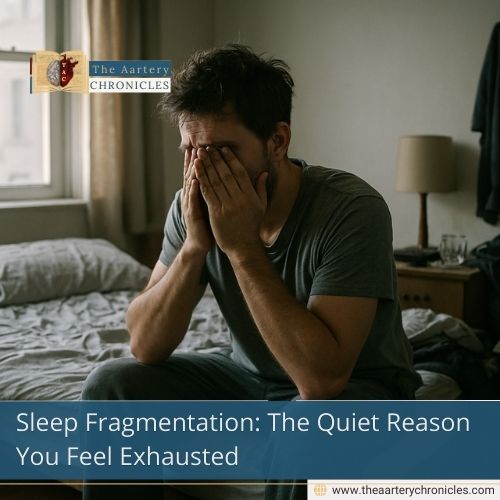
Sleep Fragmentation: The Quiet Reason You Feel Exhausted
Even after spending a full night in bed, many people wake up feeling drained. Doctors say one common reason is sleep fragmentation. This condition means your sleep keeps getting interrupted through the night, often without you realising it. As a result, your body never reaches deep, restorative sleep.
California-based gastroenterologist Dr Saurabh Sethi recently explained that sleep fragmentation can make you feel tired despite clocking seven to eight hours of rest.
In simple terms, you are asleep but not truly resting.
What really happens while you sleep
Sleep is not just “switching off.” According to the Cleveland Clinic, your body stays busy at night:
- It conserves energy and refills its reserves
- It repairs tissues and supports healing
- Your brain organises memories and learning
So when sleep keeps breaking up, these vital processes suffer. Over time, poor quality sleep affects focus, mood, immunity, and overall health.
Clear signs of low-quality sleep
Sleep fragmentation often shows up in everyday ways. Watch for these common signals:
- You wake up feeling tired
- You rely on caffeine just to feel normal
- You struggle with brain fog
- You hit an afternoon energy crash
If these sound familiar, your sleep quality may be the issue, not the number of hours.
Everyday habits that quietly disrupt sleep
Several routine behaviours can fragment sleep through the night:
- Drinking coffee or tea late in the day
- Alcohol close to bedtime
- Heavy dinners at night
- Scrolling on your phone or using bright lights in bed
Although these may seem harmless, they stimulate the brain and interfere with natural sleep cycles.
Simple steps to improve sleep quality
To reduce sleep fragmentation and wake up feeling refreshed, doctors recommend a few practical changes:
- Stop caffeine at least eight hours before bedtime
- Finish dinner about three hours before sleeping
- Limit alcohol, and avoid it near bedtime
- Keep your bedroom cool and dark
- Leave your phone outside the bed
These small adjustments often make a big difference within days.
When tiredness does not go away
If you still feel exhausted after improving sleep habits, other medical causes may be involved. These include sleep apnea, restless legs, certain medications, ongoing stress, or low iron levels. In such cases, it is best to speak with your doctor for proper evaluation.
Conclusion
Sleep fragmentation does more than cause morning fatigue. Over time, it can affect heart health, metabolism, mental clarity, and emotional well-being. Paying attention to sleep quality is just as important as counting hours.
By recognising the signs early and making simple lifestyle changes, many people can restore deeper sleep and feel more energised each day.
If you have been sleeping “enough” but still feel tired, sleep fragmentation may be the missing piece.
Source: Inputs from various media Sources

I’m a pharmacist with a strong background in health sciences. I hold a BSc from Delhi University and a pharmacy degree from PDM University. I write articles and daily health news while interviewing doctors to bring you the latest insights. In my free time, you’ll find me at the gym or lost in a sci-fi novel.
- Priya Bairagi
- Health News and Updates,People Forum
- 7 February 2026
- 13:00