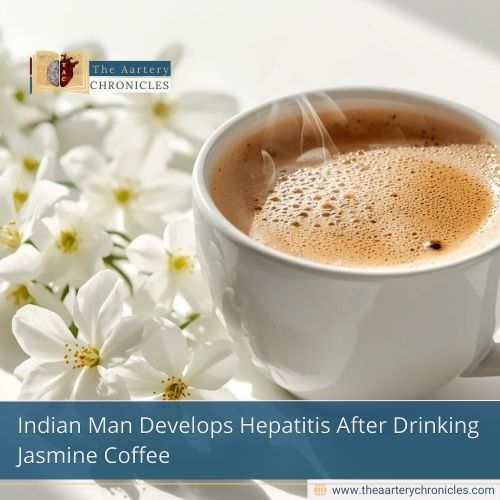

Indian Man Develops Hepatitis After Drinking Jasmine Coffee
A case of Chinese jasmine coffee liver injury has raised fresh concerns about the safety of unregulated herbal beverages after an Indian patient was hospitalised with severe hepatitis and jaundice. The incident has prompted a strong warning from a leading liver specialist against consuming so-called “exotic” herbal drinks without proper safety oversight.
The patient is now recovering, but the case highlights a growing public health issue linked to herbal products marketed as natural and harmless.
A Mysterious Illness With No Obvious Cause
The patient was admitted with classic signs of liver damage, including yellowing of the eyes and urine, along with intense itching of the hands and feet. Initial medical tests failed to identify a clear cause.
After detailed questioning and careful review of the patient’s recent habits, the treating doctor discovered a crucial detail: the individual had been drinking Chinese jasmine coffee daily.
The Hidden Trigger: Jasmine Coffee Consumption
According to Cyriac Abby Philips, widely known on social media as The Liver Doc, the patient had consumed two to three cups a day of a Chinese jasmine coffee product for about one week before symptoms began.
Once the drink was stopped and appropriate treatment started, the patient’s condition began to improve, strongly suggesting a link between the beverage and the liver injury.
This case is now being cited as a clear example of Chinese jasmine coffee liver injury, especially when consumed frequently and without knowledge of its exact ingredients.
“False Jasmine” Plants Can Be Toxic
The doctor explained that several plants commonly called “jasmine” are not true jasmine at all and can cause serious health problems.
These include:
- Yellow or Carolina Jessamine
- Night-blooming or day-blooming jasmine
- Star jasmine
Among them, night-blooming jasmine is considered especially dangerous. All parts of this plant are toxic, including its berries. Certain compounds in the plant can disrupt calcium metabolism in the body, potentially leading to damage to the liver, kidneys, and heart.
Why Herbal Drinks Can Be Risky
The lack of regulation around many herbal teas and coffees sold internationally. Consumers often have no reliable way to verify:
- Which plant species are used
- Which plant parts are included
- Whether the product has been tested for safety
As a result, drinks promoted as “natural” may still pose serious health risks.
Avoid Unregulated Herbal Beverages
The Expert strongly advised the public to stay cautious and avoid unverified herbal drinks, especially those marketed as exotic or medicinal without scientific evidence.
He emphasised that many such products are not tested for liver safety, despite claims of health benefits. This warning is particularly relevant in light of the growing number of reported cases involving Chinese jasmine coffee liver injury.
A Public Health Perspective
Reducing exposure to second-hand smoke is critical. Enclosed spaces like toilets can trap harmful smoke particles, increasing health risks for others, especially people with asthma, heart disease, or respiratory conditions.
By using smoke-sensitive glass toilets, authorities are experimenting with a behavioural deterrent rather than punishment, which may lead to better long-term compliance with smoke-free laws.
Conclusion
While the patient in this case is recovering well, the incident serves as an important reminder:
Natural does not always mean safe.
If a beverage or supplement is not clearly regulated, tested, or medically endorsed, it may carry hidden risks, especially to vital organs like the liver.
Source: Inputs from various media Sources

I’m a pharmacist with a strong background in health sciences. I hold a BSc from Delhi University and a pharmacy degree from PDM University. I write articles and daily health news while interviewing doctors to bring you the latest insights. In my free time, you’ll find me at the gym or lost in a sci-fi novel.
- Priya Bairagi
- Health News and Updates,People Forum
- 29 December 2025
- 18:00