
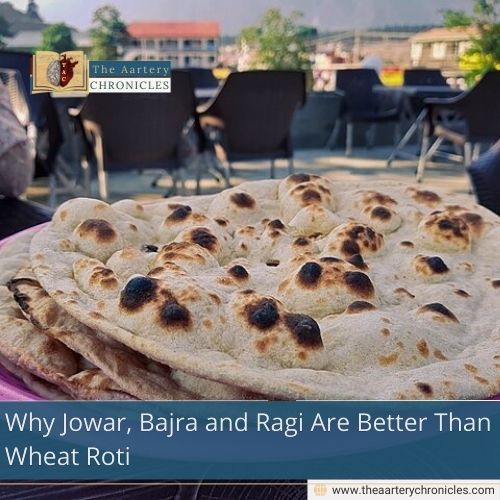
Why Jowar, Bajra and Ragi Are Better Than Wheat Roti
Is your daily roti healthy? For many households, wheat roti is a comfort food and a daily staple. But new medical insights suggest that eating only wheat rotis every day may not suit everyone, especially people with diabetes or unstable blood sugar.
A senior gastroenterologist, Dr Shubham Vatsya, recently discussed this topic during a podcast conversation with Ranveer Allahbadia, raising awareness about how wheat-based rotis can quickly raise glucose levels and why traditional grains may offer safer alternatives.
Why Wheat Roti Can Raise Blood Sugar
Wheat is a complex carbohydrate. This means your body breaks it down into glucose during digestion. While this process takes longer than simple sugars, it can still lead to noticeable blood sugar rises.
For people with diabetes or insulin resistance, this repeated glucose surge forces the body to release more insulin. Over time, this may worsen sugar control and increase the risk of metabolic problems.
Even if you do not have diabetes, frequent spikes may slowly affect weight, energy levels, and overall metabolic balance.
So when people ask, “Is your daily roti healthy?” the answer depends on your health status and the type of flour you use.
Healthier Roti Alternatives Doctors Recommend
Instead of relying only on refined or pure wheat flour, doctors encourage adding traditional Indian grains to everyday meals. These grains digest more slowly and provide added nutrients.
- Jowar for Blood Sugar Support: Jowar, also known as sorghum, has a lower glycemic index than wheat. This helps release sugar into the bloodstream more gradually. For people with diabetes, jowar roti may support steadier glucose levels.
- Bajra and Millets for Better Nutrition: Bajra and other millets contain more fibre and offer modest protein benefits. Fibre slows digestion, keeps you full longer, and supports gut health. These grains also help reduce sudden insulin spikes.
- Ragi for Iron and Bone Health: Ragi, or finger millet, stands out for its iron and calcium content. People with iron deficiency may benefit from adding ragi rotis to their meals. It also produces a gentler rise in blood sugar compared with refined wheat.
Cannot Give Up Wheat? Try Mixing Flours
Many families find it hard to stop eating wheat completely. Doctors suggest a practical middle path.
You can mix wheat flour with jowar, bajra, or ragi. This simple change lowers the overall glycemic load of the meal and helps your body absorb glucose more slowly. Over time, this may improve insulin response and energy levels.
Who Should Be Extra Careful With Wheat Roti?
Grain choices matter even more if you live with:
- Type 2 diabetes
- Prediabetes
- Insulin resistance
- Obesity
- Iron deficiency
If any of these apply to you, reviewing your diet with a qualified doctor or nutrition expert can make a meaningful difference.
Conclusion
Wheat roti is not harmful on its own, but eating it exclusively every day may contribute to blood sugar swings, especially in people already at risk.
Rotating grains or combining wheat with millets like jowar, bajra, and ragi offers a smarter approach. These small dietary shifts support better glucose control, improve nutrient intake, and promote long-term metabolic health.
Sometimes, the simplest food changes create the biggest health benefits.
Source: Inputs from various media Sources

I’m a pharmacist with a strong background in health sciences. I hold a BSc from Delhi University and a pharmacy degree from PDM University. I write articles and daily health news while interviewing doctors to bring you the latest insights. In my free time, you’ll find me at the gym or lost in a sci-fi novel.
- Priya Bairagi
- Health News and Updates,People Forum
- 14 February 2026
- 11:00