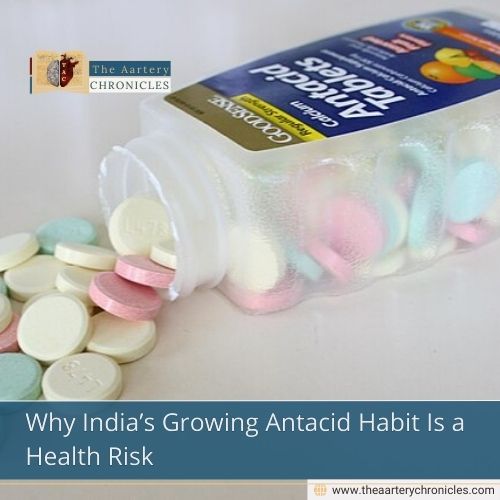
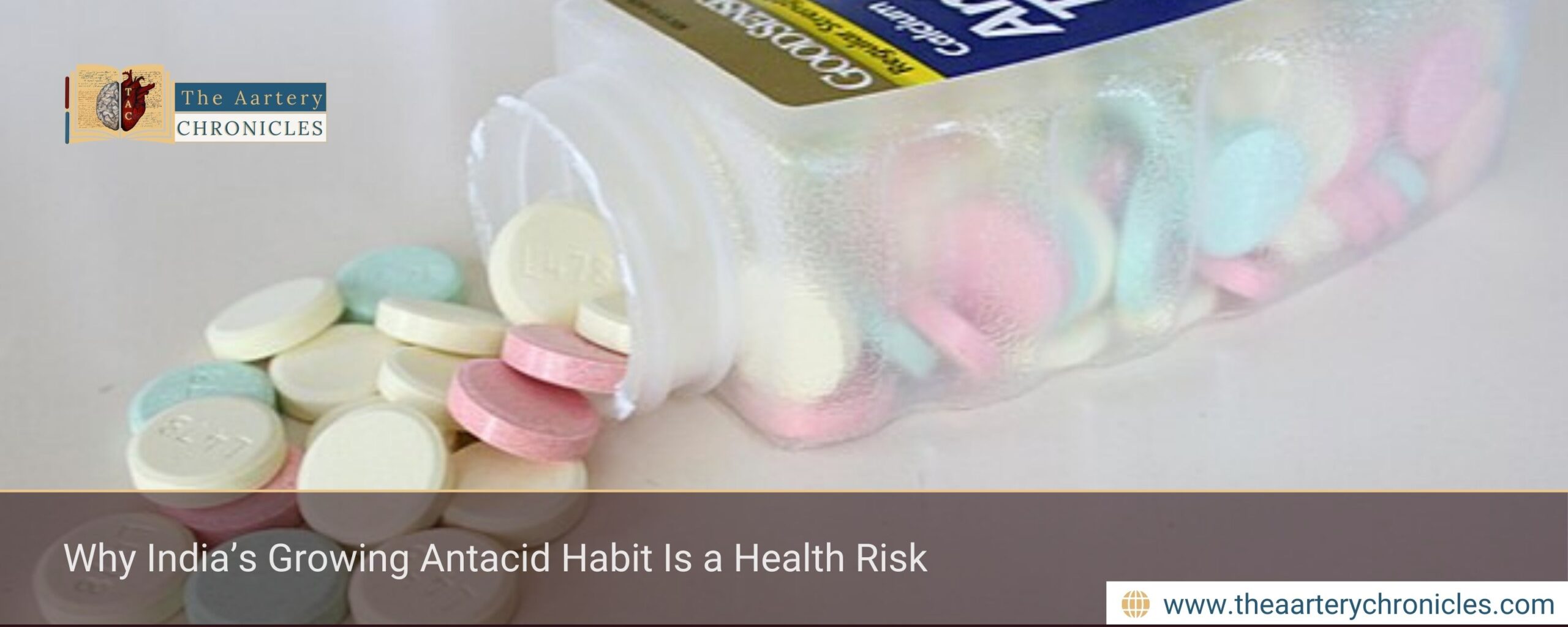
Why India’s Growing Antacid Habit Is a Health Risk
India’s antacid habit has become so common that many people now treat acidity like a daily inconvenience rather than a medical symptom. From morning routines to late-night meals, antacid pills, especially proton pump inhibitors (PPIs), are being taken frequently and often without medical advice. While these medicines offer quick relief, doctors warn that long-term and unsupervised use can seriously harm the heart, kidneys, gut, and bones.
Health experts say this growing dependence is a public health concern that needs urgent attention.
How India’s antacid habit affects kidney health
One of the most serious concerns linked to India’s antacid habit is kidney damage.
Repeated and prolonged use of PPIs has been associated with:
- Acute interstitial nephritis
- Chronic kidney disease
What makes this especially dangerous is that kidney damage often develops silently. Many patients only discover the problem when kidney function has already declined significantly, leaving limited treatment options.
Why are antacids so commonly used in India?
Stomach acid plays an important role in controlling harmful bacteria in the gut. When acid is suppressed for long periods:
- The gut microbiome balance is disturbed
- Harmful bacteria can multiply
- Symptoms like bloating, diarrhoea, and frequent infections may appear
In some cases, long-term antacid use has been linked to small intestinal bacterial overgrowth (SIBO), a condition that causes chronic digestive discomfort and poor nutrient absorption.
Bone health risks linked to long-term antacid use.
Another lesser-known effect of India’s antacid habit is its impact on bone strength.
A 2023 study published in BioMed Research International found that pantoprazole, a commonly used PPI, was associated with:
- Reduced calcium levels in the blood
- Decreased bone mineral density, especially in the femur
- Lower bone weight and volume
The study observed these changes within just 12 weeks of use, highlighting how quickly bone health can be affected. Lower calcium absorption over time may increase the risk of fractures, especially in older adults.
Heart health: masking serious warning signs
Frequent heartburn is often a symptom of gastroesophageal reflux disease (GERD), a condition where stomach acid flows back into the oesophagus due to a faulty valve.
While antacids may reduce symptoms, they can mask the real problem. If GERD is left untreated:
- The lining of the oesophagus can be damaged
- The risk of Barrett’s oesophagus increases
- The chance of oesophageal cancer may rise
More importantly, chest burning or pain is sometimes mistaken for acidity when it may actually signal a heart attack. This is why doctors strongly advise against self-treating persistent symptoms.
Safer alternatives to frequent antacid use
Doctors recommend medical evaluation before starting or continuing long-term acid-suppressing medicines. In some cases, H2 blockers may be safer options for short-term use.
Common alternatives include:
- Famotidine (found in brands like Pepcid and Mylanta AR), which has not been strongly linked to osteoporosis
- Nizatidine, another H2 blocker
Some medicines like ranitidine have been withdrawn in several countries due to safety concerns, so professional guidance is essential.
Conclusion
India’s antacid habit highlights a larger issue: self-medication and delayed diagnosis. While antacids can be helpful when used correctly, regular and unsupervised use may quietly damage vital organs over time.
If acidity is frequent, persistent, or severe, it should be treated as a medical warning sign, not just a lifestyle inconvenience. Consulting a doctor, identifying the root cause, and using medicines responsibly can protect long-term health.
Your stomach discomfort today should not become your kidney, heart, or bone problem tomorrow.
Source: Inputs from various media Sources

I’m a pharmacist with a strong background in health sciences. I hold a BSc from Delhi University and a pharmacy degree from PDM University. I write articles and daily health news while interviewing doctors to bring you the latest insights. In my free time, you’ll find me at the gym or lost in a sci-fi novel.
- Priya Bairagi
- Health News and Updates,People Forum
- 11 January 2026
- 20:00