
Why Drying Clothes Inside Your Home Is Risky
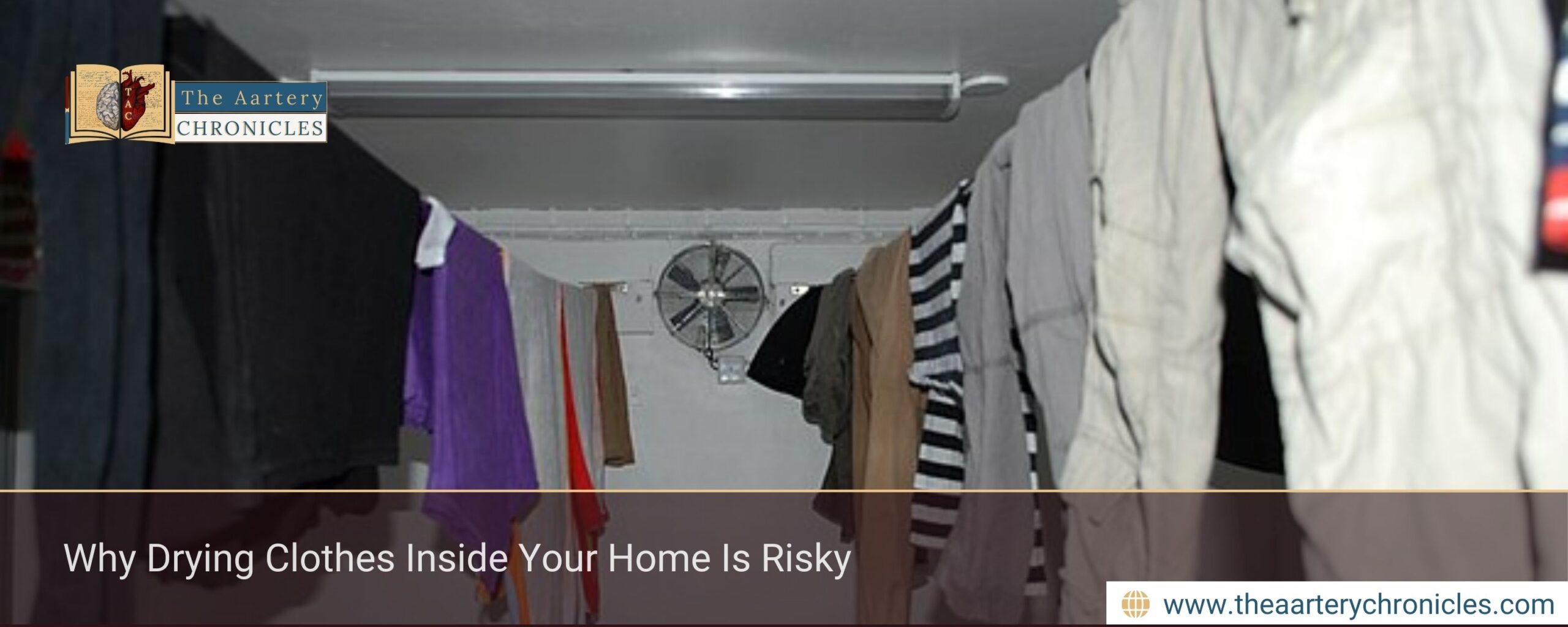
During winter and monsoon months, outdoor laundry drying becomes difficult. With little sunlight and frequent rain, many households dry clothes inside their homes. While this may seem harmless, medical experts warn that drying clothes indoors can quietly harm your health, especially when ventilation is poor.
In fact, growing scientific evidence shows that drying clothes indoors is bad for your health because it increases indoor humidity, worsens air quality, and encourages mould growth. These changes can trigger or aggravate breathing problems, allergies, and asthma, particularly in children and older adults.
How Indoor Laundry Drying Affects Air Quality
When wet clothes are hung indoors, the water in the fabric slowly evaporates into the surrounding air. Research shows that one full load of laundry can release up to two litres of moisture into a closed room.
As a result:
- Indoor humidity rises quickly
- Moisture settles on cool surfaces like walls, ceilings, and windows
- Poorly ventilated rooms trap damp air for hours or even days
Over time, these conditions closely resemble living in a damp house, something health experts strongly advise against.
What the World Health Organisation Says About Damp Indoor Spaces
The World Health Organisation has published detailed Guidelines on Indoor Air Quality: Dampness and Mould, based on extensive global research. According to these guidelines, long-term exposure to indoor dampness is linked to:
- Increased coughing and wheezing
- Worsening of asthma and allergies
- Higher risk of chronic respiratory symptoms
- Disturbances in immune system function
Importantly, studies cited by WHO show that people living in damp or mouldy homes have up to a 75% higher risk of respiratory illness compared to those in dry, well-ventilated environments.
This makes indoor c
Mould Growth: The Biggest Hidden Danger
Excess moisture from indoor laundry does not disappear; it often condenses on walls and windows, creating ideal conditions for mould.
Common indoor moulds such as Aspergillus, Cladosporium, and Stachybotrys can grow silently and release spores into the air. When inhaled, these spores may:
- Irritate the nose, throat, and lungs
- Trigger allergic reactions
- Worsen asthma symptoms
- Increase the risk of infections in vulnerable people
Children, elderly individuals, and those with existing lung conditions are especially at risk.
Other Health Risks You Should Know
Beyond mould, drying clothes indoors can also contribute to:
- Growth of dust mites, which thrive in humid air
- Eye, nose, and throat irritation
- Exposure to residual chemicals from detergents and fabric softeners
- Release of volatile organic compounds (VOCs), especially from synthetic fabrics
Together, these factors further degrade indoor air quality and explain why many experts agree that drying clothes indoors is bad for your health.
Practical Recommendations from Health Experts
Health organisations, including WHO, strongly recommend controlling indoor moisture to protect respiratory health. If outdoor drying is not possible, consider these safer alternatives:
- Use a vented tumble dryer that releases moisture outside
- Run a dehumidifier in the room where clothes are drying
- Always keep windows open or use exhaust fans for airflow
- Avoid drying clothes in bedrooms or living areas
- Dry smaller loads to reduce moisture buildup
Conclusion
Drying clothes indoors may feel like a simple household solution, but medical evidence shows it can have serious health consequences. By raising humidity and encouraging mould growth, this everyday habit can compromise indoor air quality and respiratory health.
The takeaway is clear: drying clothes indoors is bad for your health unless moisture is properly controlled. Whenever possible, use balconies, outdoor spaces, or well-ventilated drying systems to keep your home and your lungs healthy.
Source: Inputs from various media Sources

I’m a pharmacist with a strong background in health sciences. I hold a BSc from Delhi University and a pharmacy degree from PDM University. I write articles and daily health news while interviewing doctors to bring you the latest insights. In my free time, you’ll find me at the gym or lost in a sci-fi novel.
- Priya Bairagi
- Health News and Updates,People Forum
- 22 January 2026
- 15:00