
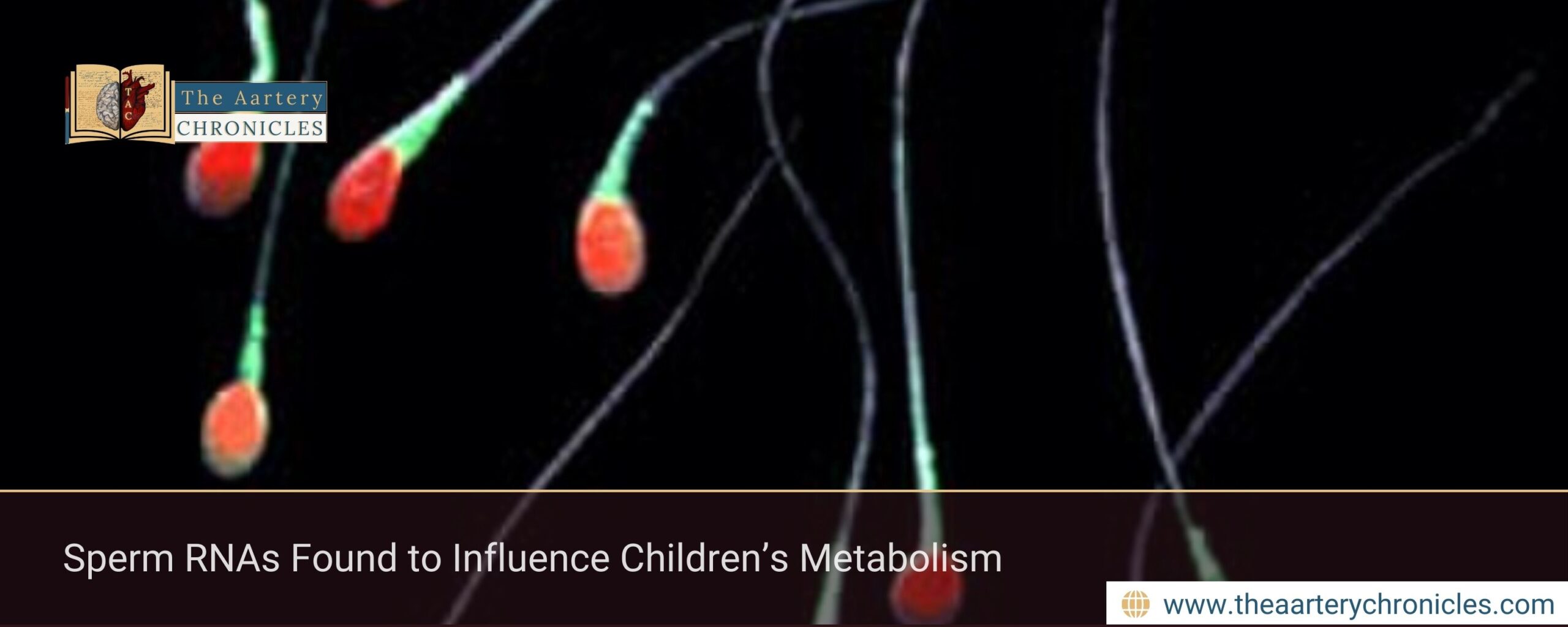
Sperm RNAs Found to Influence Children’s Metabolism
New research shows that a father’s health before conception matters more than once believed. New findings reveal that sperm RNAs may act as biological messengers, passing information about a father’s immune health directly to his children. This discovery helps explain how illness or inflammation in fathers could shape the long-term metabolic and brain health of their offspring.
The study, published in PNAS Nexus, offers fresh insight into how subtle molecular changes in sperm can have lasting effects across generations.
How the Study Was Carried Out
Researchers studied male mice by triggering a short-term immune response similar to a bacterial infection. To do this, the mice were given lipopolysaccharides (LPS), substances derived from Escherichia coli bacteria that are known to activate the immune system.
One week after exposure, the mice showed:
- Reduced sperm counts
- Poorer sperm quality
- Higher levels of a specific type of sperm RNAs called 28S ribosomal small RNAs (28S-rsRNAs)
Importantly, these changes were not permanent. After six weeks, about the length of a full sperm production cycle, the sperm largely returned to normal. This timing suggests that the changes likely occur while sperm mature in a structure called the epididymis, rather than during their initial formation.
Why Sperm RNAs Matter
Sperm do more than deliver DNA. They also carry small RNA molecules that help regulate early development. In this study, scientists focused on 28S-rsRNAs, which increased after immune stress.
To test whether these RNAs directly affect offspring, the researchers injected laboratory-made 28S-rsRNAs into fertilised mouse eggs. This allowed them to isolate the impact of the RNAs themselves.
Effects Seen in the Next Generation
Male mice born from these injected embryos showed noticeable changes as they grew:
- Larger overall body size
- Higher fat-to-muscle ratio
- Reduced sensitivity to insulin, a key marker of metabolic health
In addition, behavioural testing revealed that these offspring were:
- More anxious
- More aggressive
Brain analysis showed altered gene activity in the hippocampus, a region involved in emotion, memory, and stress responses.
Together, these findings suggest that sperm RNAs can carry signals from a father’s immune system directly into the next generation, influencing both physical and mental health.
A New View of Inherited Health Risks
Traditionally, inherited disease risk has been linked mainly to DNA mutations. This research highlights a different mechanism of epigenetic inheritance where information is passed on without changing the DNA sequence itself.
The study suggests that 28S-rsRNAs act as epigenetic messengers, translating a father’s immune stress into long-term changes in offspring metabolism and behaviour.
Why This Research Matters for Public Health
These findings may help explain why children of fathers who experience illness, inflammation, or immune stress before conception may face higher risks of metabolic or neurobehavioral disorders.
In the future, understanding sperm RNAs could:
- Improve early risk screening
- Support new fertility diagnostics
- Open doors to therapies that interrupt cycles of inherited poor health
Conclusion
This research strengthens the message that paternal health plays a critical role in shaping the next generation. By uncovering how sperm RNAs transmit information from father to child, scientists are redefining how we understand inheritance and highlighting the importance of men’s health long before pregnancy begins.
As research continues, these insights may lead to practical strategies that protect not just individual health, but family health across generations.
Source: Inputs from various media Sources

I’m a pharmacist with a strong background in health sciences. I hold a BSc from Delhi University and a pharmacy degree from PDM University. I write articles and daily health news while interviewing doctors to bring you the latest insights. In my free time, you’ll find me at the gym or lost in a sci-fi novel.
- Priya Bairagi
- Health News and Updates,People Forum
- 21 January 2026
- 11:02