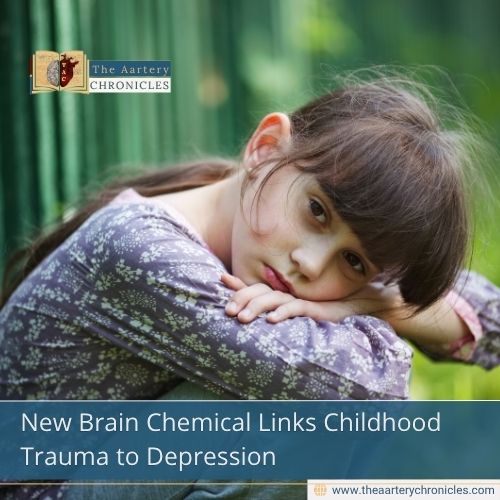

New Brain Chemical Links Childhood Trauma to Depression
A team of neuroscientists from Columbia University and McGill University has identified a brain chemical called SGK1 that appears to connect childhood trauma with depression and suicidal behavior.
The study, published in Molecular Psychiatry, highlights SGK1 and depression as a key biological link that may explain why people exposed to early-life stress often face lifelong mental health challenges. Researchers say that new medications blocking SGK1 could offer hope for patients who do not respond to standard antidepressants such as SSRIs.
What Is SGK1 and Why It Matters
SGK1 (serum- and glucocorticoid-regulated kinase 1) is a stress-related protein found in the brain. The study found that people who had difficult or traumatic childhoods, such as abuse, neglect, or family dysfunction, tend to have higher levels of SGK1, especially those who later developed depression or suicidal thoughts.
Dr. Christoph Anacker, lead author and assistant professor of clinical neurobiology at Columbia University, explained that SGK1 and depression appear strongly linked. “Current antidepressants often don’t work well for people who experienced early trauma,” he said. “Our discovery suggests SGK1 could be the missing biological connection and a promising new treatment target.”
How Childhood Trauma Alters the Brain
Research shows that around 60% of adults with major depression and about two-thirds of suicide attempters experienced some form of early-life adversity.
Such early stress appears to alter the brain’s stress-response system. The latest findings suggest that SGK1 acts as a “stress amplifier”, making people more vulnerable to depression later in life.
About ten years ago, Dr. Anacker’s group first noticed unusually high SGK1 levels in the blood of unmedicated patients with depression. The new study extends those results by analysing brain tissue from individuals who died by suicide.
Evidence Linking SGK1 to Depression and Suicide
When scientists examined brain samples from suicide victims, they found significantly higher SGK1 levels, particularly in those with histories of childhood trauma, sometimes up to twice as high as in other cases.
Further genetic studies revealed that children carrying variants that boost SGK1 production were more likely to develop depression as teenagers. This strongly supports SGK1 as a biological driver of depression and suicidality among trauma-exposed individuals.
A New Path for Antidepressant Development
The discovery opens the door to a new class of antidepressants that specifically block SGK1 activity.
In preclinical experiments, SGK1 inhibitors given to mice prevented stress-induced depressive behaviours, suggesting a similar benefit might occur in humans.
Since SGK1 inhibitors are already being tested for other medical conditions like atrial fibrillation, scientists believe that clinical trials for SGK1-based antidepressants could start soon.
Dr. Anacker added that genetic screening could one day help identify people most likely to benefit from SGK1-targeted treatments. “There’s an urgent need to help those most at risk after early-life adversity,” he said. “SGK1 offers a promising way forward.”
Conclusion
The discovery of SGK1 and depression offers new hope for patients whose depression stems from early trauma. By focusing on this stress-sensitive brain chemical, scientists may soon develop treatments that work where traditional antidepressants fail, potentially reducing the burden of depression and suicide worldwide.
Source: Inputs from various media Sources

I’m a pharmacist with a strong background in health sciences. I hold a BSc from Delhi University and a pharmacy degree from PDM University. I write articles and daily health news while interviewing doctors to bring you the latest insights. In my free time, you’ll find me at the gym or lost in a sci-fi novel.
- Priya Bairagi
- Health News and Updates,People Forum
- 13 November 2025
- 13:00