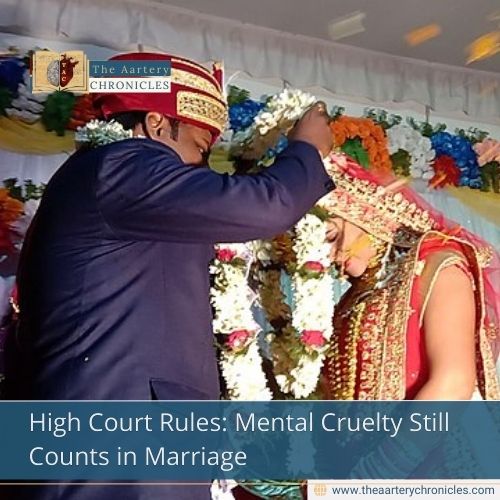

High Court Rules: Mental Cruelty Still Counts in Marriage
The Delhi High Court has ruled that mental cruelty in marriage cannot be overlooked simply because the wife was pregnant or because the couple briefly reconciled. In a detailed judgment delivered on November 20, the bench clarified that a pregnancy does not erase earlier behaviour that significantly harms a partner’s emotional well-being.
Background of the Case
The couple married in March 2016. However, by 2021, the husband sought divorce, reporting persistent emotional distress. He alleged that his wife:
- openly declared she did not want the marriage and preferred another partner
- pressured him to live away from his elderly parents
- demanded a new home in her own name
- threw a cup of tea at him when he could not meet her demands
- repeatedly refused cohabitation, straining both marital and family relationships
The family court initially rejected his petition in March 2025. It concluded that cruelty had not been proven and suggested that the wife’s miscarriage in early 2019 indicated a period of harmony.
Pregnancy Cannot Erase Harmful Behaviour, Says Court
In its 11-page ruling, the High Court overturned the earlier decision. The judges emphasised that temporary reconciliation or pregnancy cannot neutralise consistent abusive behaviour. They noted evidence of ongoing threats, verbal aggression, and denial of marital companionship key indicators of mental cruelty in marriage.
The bench stated that a miscarriage or pregnancy is not reliable proof of a peaceful relationship, particularly when troubling conduct continues afterwards.
Mental Health Highlights
Legal experts highlight that such rulings reinforce the importance of mental health in marital disputes. Persistent psychological harm, such as humiliation, intimidation, and emotional neglect, can significantly affect an individual’s long-term well-being. Recognising mental cruelty in marriage helps place emotional safety on the same level as physical safety within intimate relationships.
Conclusion
The High Court granted the husband a divorce, holding that the wife’s continuing abusive behaviour and refusal to cohabit amounted to mental cruelty that could not be overlooked.
Source: Inputs from various media Sources

I’m a pharmacist with a strong background in health sciences. I hold a BSc from Delhi University and a pharmacy degree from PDM University. I write articles and daily health news while interviewing doctors to bring you the latest insights. In my free time, you’ll find me at the gym or lost in a sci-fi novel.
- Priya Bairagi
- Health News and Updates,People Forum
- 28 November 2025
- 22:00