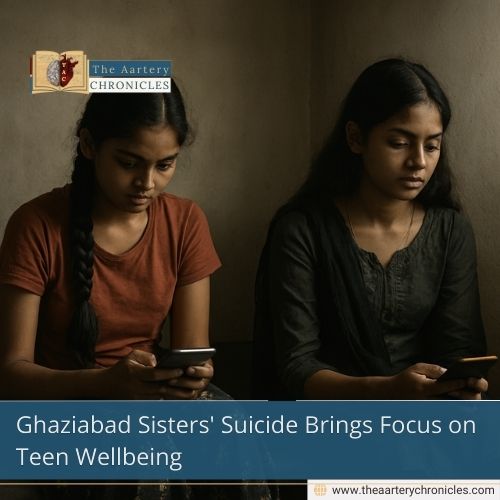
Ghaziabad Sisters' Suicide Brings Focus on Teen Wellbeing
The Ghaziabad sisters suicide has deeply shaken families across India and brought urgent attention to children’s mental health in the digital age. Three sisters aged 12, 14, and 16 reportedly jumped from the ninth floor of their residential building in Ghaziabad.
According to police sources, the girls had stopped attending school nearly a year ago and spent most of their time on mobile phones. Their phone access was restricted just days before the tragedy. Soon after, the devastating incident occurred.
Health experts now warn that excessive screen exposure and immersive online content can seriously affect developing brains. The Ghaziabad sisters’ suicide is being seen as a painful reminder of how fragile adolescent mental health can be when digital dependence goes unchecked.
Why adolescents are especially vulnerable to digital addiction
Doctors explain that teenage brains are still maturing, particularly the areas responsible for judgment, planning, and impulse control. At the same time, emotional and reward centres are already highly active.
Because of this imbalance, adolescents find it harder to assess risks or understand long-term consequences. When online games or platforms offer constant rewards, levels, or challenges, young users can slowly lose perspective.
Over time, the brain begins to treat these digital experiences as important and meaningful rather than simple entertainment.
How task-based games influence young brains
Many modern online games and challenges are designed to encourage obedience to tasks, secrecy, and emotional attachment. Players are rewarded with points, ranks, or virtual recognition, which triggers dopamine release in the brain.
This pattern has been observed earlier in challenge-based platforms like the Blue Whale Challenge and immersive multiplayer games such as PUBG.
Mental health professionals say repeated exposure to these reward loops can overwhelm a developing brain. Gradually, the digital world may start to feel more real and more important than everyday life.
When gaming becomes an emotional dependence
For vulnerable teenagers, especially those dealing with academic stress, loneliness, low self-esteem, or emotional distress, online platforms can become their main source of comfort and identity.
With time, this dependence creates pressure to stay connected, fear of failure, and emotional exhaustion. Experts emphasise that suicide in such situations is rarely sudden. It usually follows prolonged stress, inner conflict, and a growing sense of being trapped.
Multiple studies have already linked excessive gaming with anxiety, depression, aggression, self-harm, and suicidal behaviour.
The Ghaziabad sisters’ suicide underscores how serious this emotional dependence can become when early warning signs are missed.
Warning signs parents and caregivers should watch for
Health professionals urge families to look beyond screen time alone. Important red flags include:
- Social withdrawal or isolation
- Sudden mood changes or irritability
- Disturbed sleep
- Declining academic performance
- Emotional detachment from family
- Extreme attachment to a specific game or online platform
These changes may appear gradually, but they deserve immediate attention.
Conclusion
Experts stress that simply taking away phones is not enough. Children need open conversations about emotions, online experiences, and mental well-being. They also need reassurance that seeking help is safe and encouraged.
Parents, teachers, and caregivers play a vital role in creating supportive environments where teenagers feel heard and understood.
Source: Inputs from various media Sources

I’m a pharmacist with a strong background in health sciences. I hold a BSc from Delhi University and a pharmacy degree from PDM University. I write articles and daily health news while interviewing doctors to bring you the latest insights. In my free time, you’ll find me at the gym or lost in a sci-fi novel.
- Priya Bairagi
- Health News and Updates,People Forum
- 7 February 2026
- 09:00