Fatiha El-Ghorri reveals hidden hysterectomy after cancer
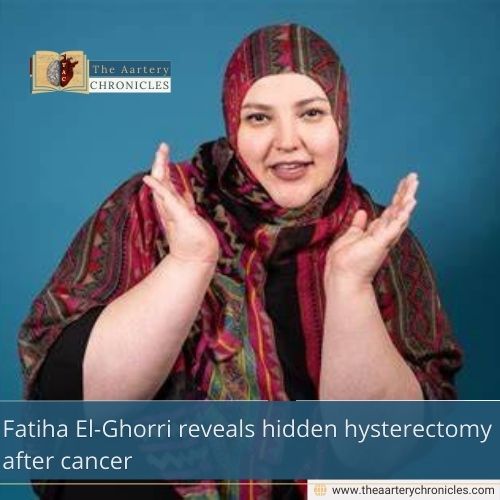
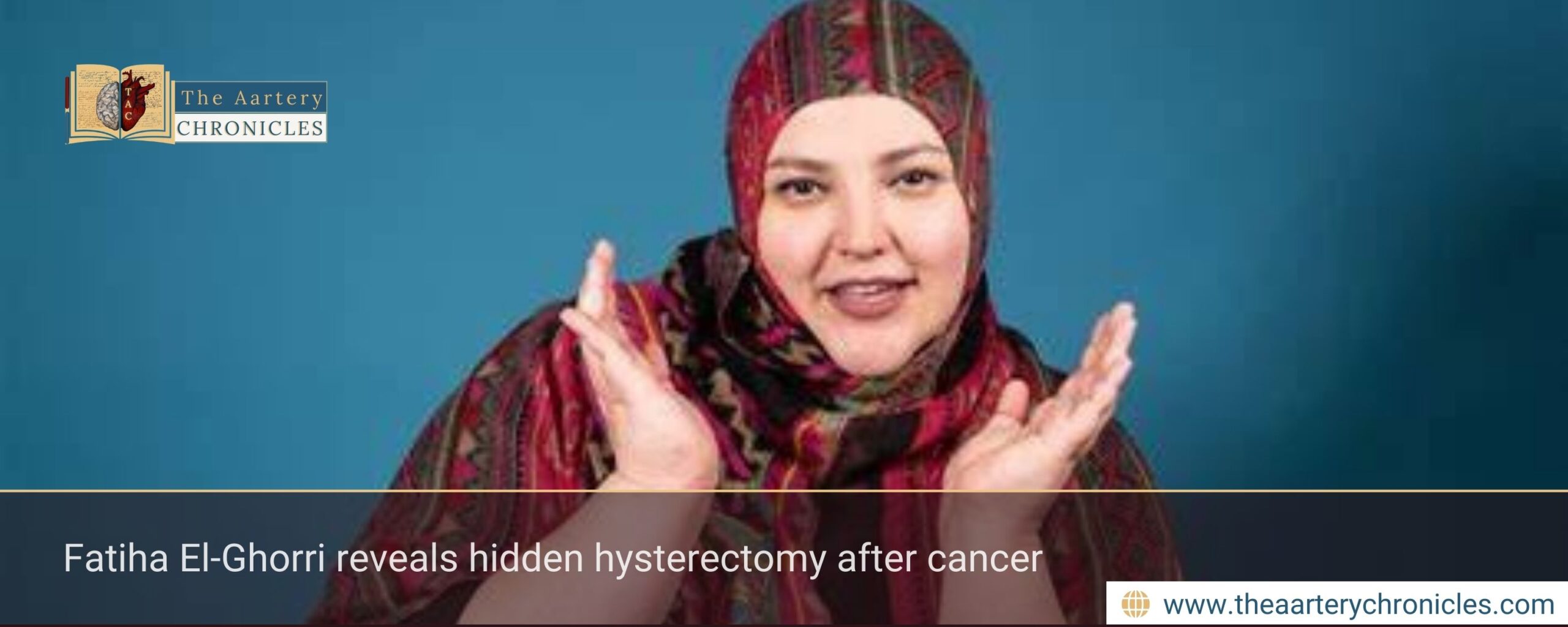
British comedian and actor Fatiha El-Ghorri’s hysterectomy and endometrial cancer news has prompted an outpouring of support after the 44-year-old revealed she quietly underwent major surgery last year. The performer, best known for her appearance on Taskmaster, confirmed she had a hysterectomy in May following a diagnosis of stage 1 endometrial cancer.
She shared her story on Instagram to raise awareness and to help others recognise early warning signs.
A routine scan led to urgent tests
About a year ago, Fatiha attended a health check that included a transvaginal scan, an internal ultrasound used to look at the womb.
Soon after, her GP told her the scan showed something unusual. While cancer was not confirmed at that stage, doctors advised further tests and explained that surgery was the only way to know for certain.
Not long after, Fatiha agreed to proceed with an operation.
Surgery confirmed stage 1 endometrial cancer
In May, she had a hysterectomy and chose to have her ovaries removed at the same time. She explained that keeping her ovaries could have meant chemotherapy or additional surgery if cancer were found.
Her fears were confirmed when doctors diagnosed stage 1 endometrial cancer. Thankfully, the disease had not spread beyond her womb. Surgeons removed all visible cancer, and she did not need chemotherapy or further treatment.
This early outcome highlights why prompt testing matters in suspected womb warnings and why Fatiha El-Ghorri’s hysterectomy for endometrial cancer has become such an important public health conversation.
Medical menopause proved harder than the operation
Although the surgery went well, Fatiha said the sudden menopause caused by ovary removal was far more difficult to manage.
She described entering “medical menopause,” which brought a wide range of symptoms, including:
- Low mood and depression
- Vaginal dryness that caused pain
- Memory and concentration problems
- Changes in appetite
- Dry skin and hair changes
- Emotional distress
She also faced a seven-month wait for a specialist menopause appointment. Eventually, she sought private care and began taking vitamins and supplements that helped ease some symptoms.
Fatiha stressed that menopause involves far more than hot flushes and mood swings. She said it affects mental, physical, and hormonal health in lasting ways.
Recovery was long and physically demanding
Fatiha had keyhole surgery, leaving five small cuts across her abdomen. In the weeks that followed, everyday tasks became overwhelming.
She struggled to sit upright, cough, laugh, or even go to the toilet without pain. She could not lift objects or bend at the waist for several months, only regaining that movement close to Christmas.
She admitted feeling helpless during recovery and initially kept her experience private, sharing only with close friends and family.
Fans and fellow comedians offer support
After she went public, messages of love quickly followed. Fellow comedian Mathew Baynton praised her strength, while Sarah Millican sent her heartfelt support.
Fans also thanked her for speaking openly, saying her story reminded them that many people carry invisible struggles.
Fatiha is also known for roles in We Are Lady Parts and Mr Bigstuff, but she says sharing this personal journey feels just as important as any on-screen work.
What is endometrial cancer?
Endometrial cancer, often called womb or uterine cancer, begins in the lining of the uterus.
If left untreated, it can spread to nearby areas such as the cervix, ovaries, fallopian tubes, vagina, and vulva.
Unlike cervical cancer, routine tests like smear exams do not reliably detect endometrial cancer. This makes paying attention to symptoms especially important.
Common warning signs include:
- Abnormal vaginal bleeding (seen in around 90 per cent of cases)
- Bleeding between periods
- Bleeding after menopause
- Changes in period flow
- Blood-tinged vaginal discharge
These symptoms do not always mean cancer, but doctors advise seeing a gynecologist promptly if any appear.
Conclusion
Fatiha hopes more women will take unusual symptoms seriously and seek help early. Her experience shows how fast action can lead to successful treatment and avoid chemotherapy.
As conversations around Fatiha El-Ghorri’s hysterectomy and endometrial cancer continue, her story stands as a reminder that early checks save lives and that menopause after cancer deserves far greater medical and social support.
Source: Inputs from various media Sources

I’m a pharmacist with a strong background in health sciences. I hold a BSc from Delhi University and a pharmacy degree from PDM University. I write articles and daily health news while interviewing doctors to bring you the latest insights. In my free time, you’ll find me at the gym or lost in a sci-fi novel.
- Priya Bairagi
- Health News and Updates,People Forum
- 20 February 2026
- 09:00