
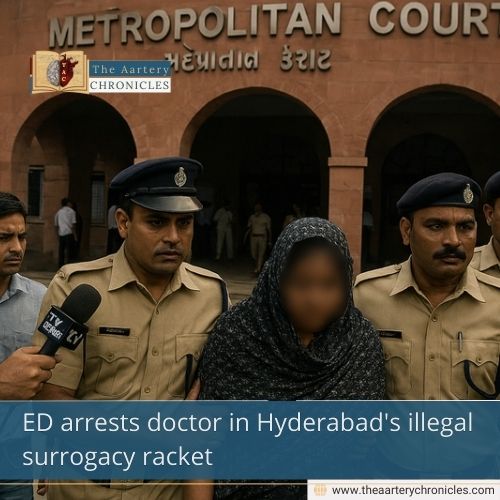
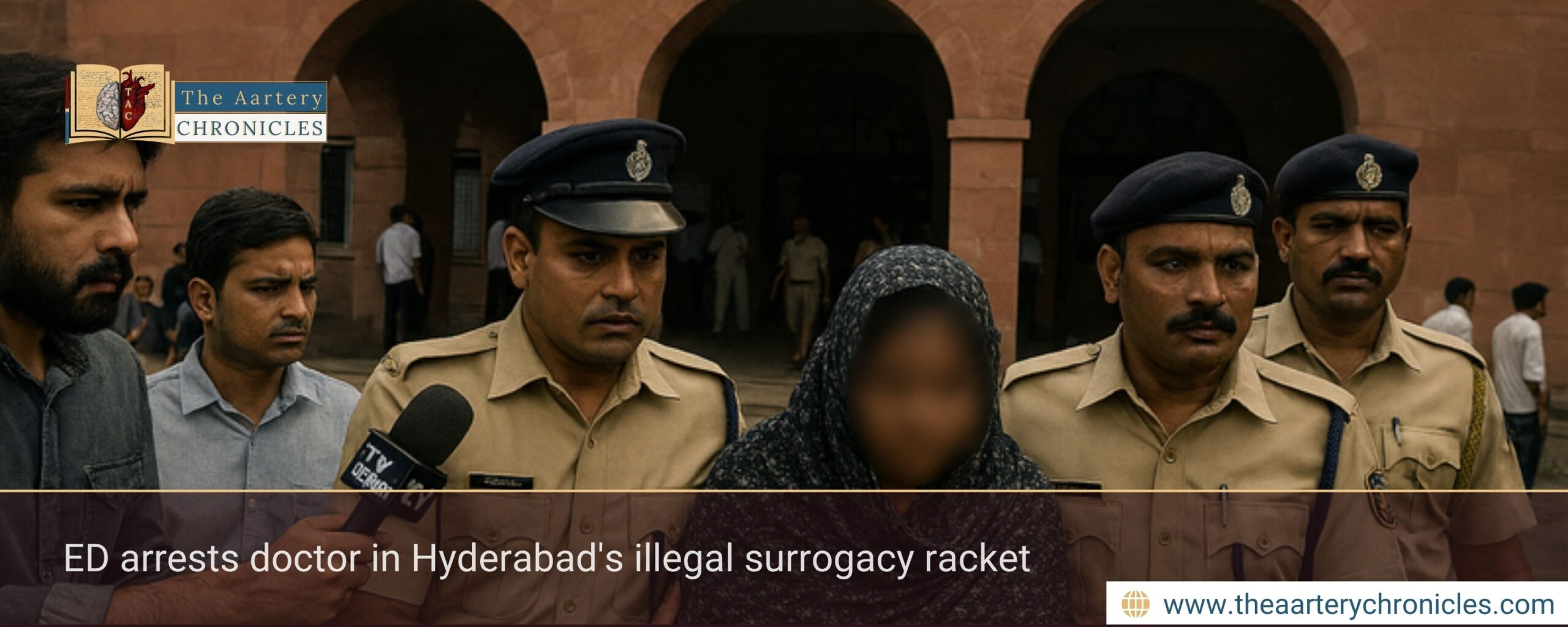
ED arrests doctor in Hyderabad's illegal surrogacy racket
The Directorate of Enforcement (ED) has arrested Dr Athuturi Namratha, also known as Pachipalli Namratha, for alleged money laundering linked to an organised baby trafficking network.
The arrest was made by the ED’s Hyderabad Zonal Office under the Prevention of Money Laundering Act (PMLA), following a detailed investigation into unlawful surrogacy practices reportedly run through Universal Srusthi Fertility and Research Centre in Hyderabad.
She was produced before a metropolitan sessions court and has been sent to judicial custody until February 26.
What triggered the ED investigation
The central agency began its probe after multiple FIRs were filed by the Gopalapuram Police Station. These complaints included charges of fraud, cheating, criminal conspiracy, illegal surrogacy, and child trafficking.
Earlier, local police had already arrested Dr Namratha in the same case. She was later granted bail on November 27, 2025. However, according to ED officials, she remained evasive during questioning and failed to cooperate even when confronted with documentary evidence.
Because of this, the agency moved forward with her arrest under PMLA provisions.
How the illegal surrogacy racket in Hyderabad allegedly worked
According to the ED, Dr Namratha offered childless couples newborn babies by operating a covert surrogacy network with the help of clinic staff, agents, and sub-agents.
Here is how investigators say the system functioned:
- Couples were promised babies through surrogate pregnancies.
- Their gametes were collected to make the process appear legitimate.
- In reality, newborns were allegedly sourced from poor and vulnerable parents who felt unable to raise a child or were seeking pregnancy termination.
- A network of middlemen identified pregnant women and persuaded them to give up their babies after delivery in exchange for money.
The agency claims Dr Namratha paid around Rs 3.5 lakh for a girl child and Rs 4.5 lakh for a boy child.
Even after authorities suspended her medical licence and registered several criminal cases, she allegedly continued operations. Deliveries reportedly took place at her hospital in Visakhapatnam after her Secunderabad facility lost approval.
Forged birth records and financial trail
Investigators also allege that birth records sent to municipal authorities were falsified. These documents reportedly listed the commissioning couples as biological parents, instead of the real mothers.
During searches at multiple locations, officials seized papers showing her involvement in the racket dating back to 2014.
The ED further stated that:
- Large sums were collected from couples through both cash and cheque payments.
- Portions of this money were distributed as commission to agents and sub-agents.
- Biological parents of trafficked babies also received payments.
This financial flow forms the basis of the money laundering charges.
A growing public health and ethics concern
Medical experts say cases like this highlight serious gaps in oversight of fertility clinics and surrogacy services. Beyond financial crimes, illegal surrogacy puts both mothers and newborns at medical risk while exploiting economically vulnerable families.
Authorities stress that the illegal surrogacy racket in Hyderabad is being treated as both a criminal and public health issue. The ED confirmed that further investigation is ongoing and more arrests are possible.
Conclusion
Surrogacy, when done legally and ethically, can help many families. However, unregulated practices can lead to child trafficking, unsafe deliveries, forged medical records, and emotional trauma for all involved.
Officials urge couples seeking fertility treatment to verify clinic credentials carefully and follow only government-approved surrogacy pathways.
As the illegal surrogacy racket Hyderabad case unfolds, it serves as a stark reminder of the need for stronger monitoring of reproductive health services and stricter enforcement against medical misconduct.
Source: Inputs from various media Sources

I’m a pharmacist with a strong background in health sciences. I hold a BSc from Delhi University and a pharmacy degree from PDM University. I write articles and daily health news while interviewing doctors to bring you the latest insights. In my free time, you’ll find me at the gym or lost in a sci-fi novel.
- Priya Bairagi
- Health News and Updates,People Forum
- 14 February 2026
- 15:00