
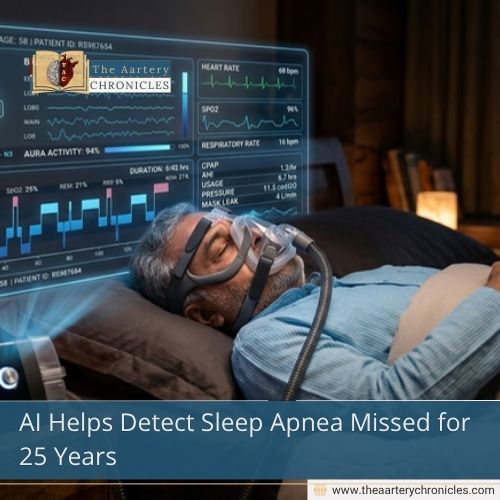

AI Helps Detect Sleep Apnea Missed for 25 Years
A recent online post has sparked discussion after a family in India shared how an AI chatbot helped point toward undiagnosed sleep apnea in a 62-year-old man whose condition had gone unnoticed for over two decades. The case has raised important questions about gaps in long-term care and how digital tools may support medical decision-making.
A long medical journey with no clear answers
For nearly 25 years, the patient lived with several serious health problems. He had kidney failure requiring regular dialysis, along with diabetes and high blood pressure. He also suffered a stroke six years ago.
However, one symptom remained unexplained throughout this period. He experienced severe headaches that appeared only when he lay down to sleep. Despite visiting multiple specialists and undergoing repeated tests such as brain scans and blood investigations, doctors could not find a clear cause.
As time passed, the headaches continued without any effective treatment, leaving the family increasingly concerned.
Turning to AI for fresh insight
Eventually, a family member decided to organise all medical reports, scan results, and symptom details and share them with an AI chatbot. Over a few days, the system reviewed the information and began identifying patterns.
Importantly, it highlighted one key detail that had not been fully explored before. The headaches were positional, meaning they started when the patient lay down. This observation became central to the next step.
In addition, the AI suggested a possible link between dialysis patients and undiagnosed sleep apnea, noting that a significant percentage of such patients may have hidden sleep-related breathing disorders.
Connecting overlooked symptoms
The chatbot then prompted the family to look deeper into sleep-related symptoms. When asked about snoring, the answer revealed a long history of loud snoring for over 25 years. The patient also had a habit of sleeping during the day for many years.
These details, when viewed together, strongly pointed toward undiagnosed sleep apnea, a condition where breathing repeatedly stops and starts during sleep.
Although these signs may appear obvious in hindsight, they had not been connected during earlier consultations.
Diagnosis confirmed through a sleep study
Following this suggestion, the family arranged a sleep study. The results confirmed the presence of sleep apnea.
Doctors then started treatment using a CPAP machine, which helps keep the airway open during sleep. According to the family, the improvement was immediate. The patient’s long-standing headaches disappeared after starting therapy.
Doctors and the public react to the case
The case quickly drew mixed reactions online. Some healthcare professionals noted that sleep apnea is a common condition and is usually screened early, especially in patients with long-term illnesses.
At the same time, others pointed out that real-world clinical settings often involve heavy patient loads. As a result, subtle symptom connections may sometimes be missed.
Many agreed that AI did not replace doctors in this situation. Instead, it helped bring together information from different specialities and highlighted a pattern that had gone unnoticed.
Conclusion
This case highlights how undiagnosed sleep apnea can remain hidden even in patients receiving regular medical care. It also shows the importance of paying attention to everyday symptoms such as snoring, daytime sleepiness, and positional discomfort.
While AI tools cannot replace clinical judgment, they may support both patients and doctors by organising information, identifying patterns, and prompting the right questions.
Source: Inputs from various media Sources

I’m a pharmacist with a strong background in health sciences. I hold a BSc from Delhi University and a pharmacy degree from PDM University. I write articles and daily health news while interviewing doctors to bring you the latest insights. In my free time, you’ll find me at the gym or lost in a sci-fi novel.
- Priya Bairagi
- Health News and Updates,People Forum
- 28 March 2026
- 20:00