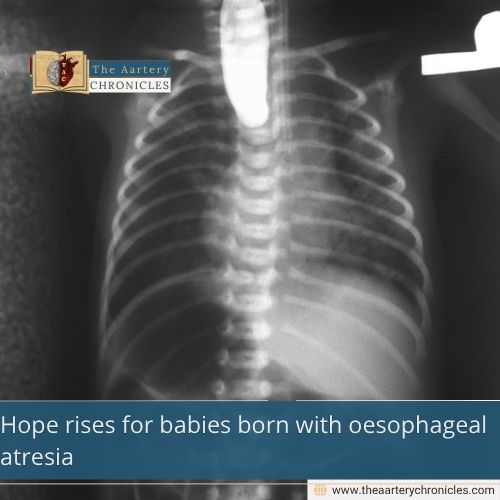
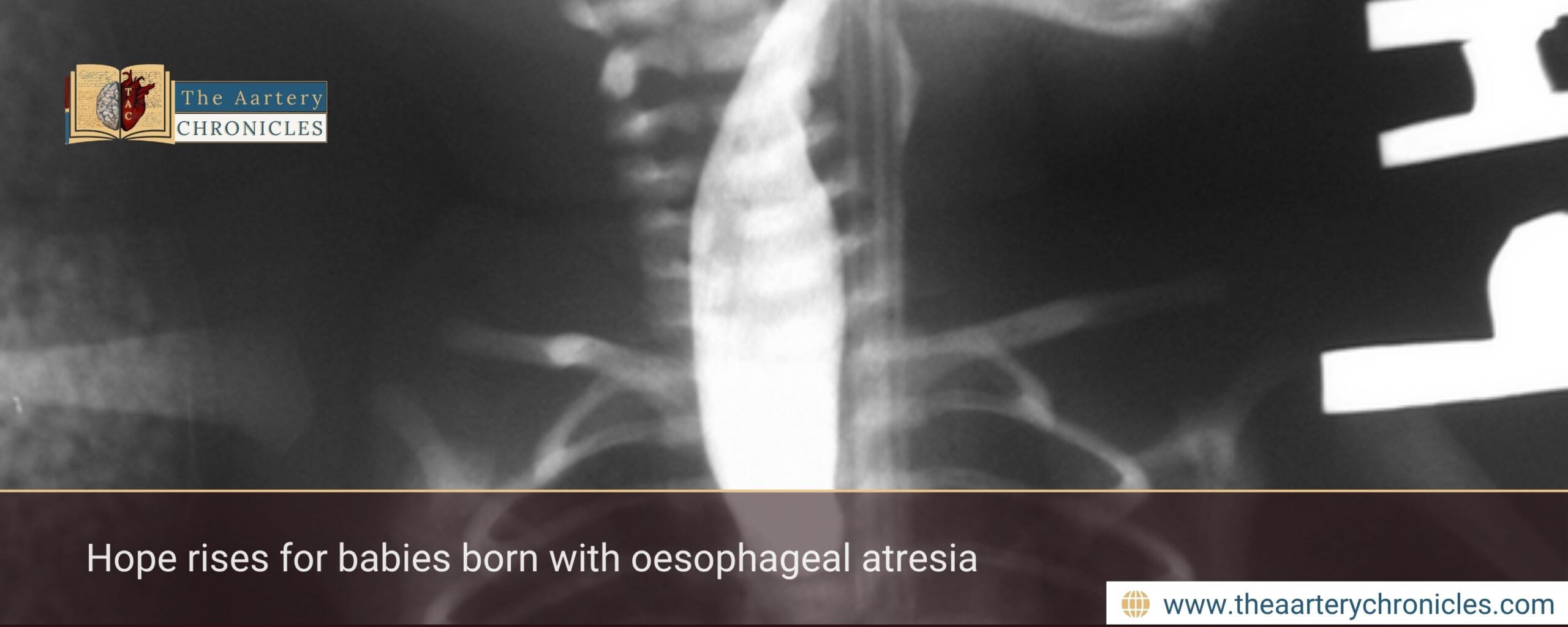
Hope rises for babies born with oesophageal atresia
A lab-grown oesophagus developed by British scientists could change how doctors treat babies born with serious food pipe defects. Researchers from Great Ormond Street Hospital and University College London have successfully created and tested a replacement oesophagus in animals, allowing them to swallow normally after surgery.
This early success has raised hope for children born with severe conditions such as oesophageal atresia, where the food pipe does not properly connect to the stomach.
What is a lab-grown oesophagus, and why does it matter?
A lab-grown oesophagus is an engineered piece of tissue designed to replace damaged or missing parts of the food pipe. In this research, scientists created a natural framework using pig tissue and then added the patient’s own cells.
Because the tissue is built using the recipient’s cells, the body is less likely to reject it. This means patients may not need long-term anti-rejection medicines, which often weaken the immune system and increase the risk of infections.
How the new technique works
The process involves several carefully planned steps:
- Scientists take an oesophagus from a pig because its structure is similar to humans
- They remove all living cells, leaving behind a biological scaffold
- Muscle cells from the recipient are added to this scaffold
- The tissue is grown in a controlled environment for about a week
- Finally, the engineered oesophagus is implanted into the body
After transplantation in animal studies, the tissue integrated well and began to function like a natural oesophagus.
Promising results from animal studies
The findings, published in Nature Biotechnology, showed encouraging outcomes:
- All eight animals survived the surgery
- They were able to eat and swallow normally
- The implanted tissue developed muscles, nerves, and blood vessels
- It successfully pushed food down to the stomach
- The animals remained healthy over a six month observation period
These results suggest that a lab grown oesophagus can restore basic function and adapt within the body.
A possible breakthrough for oesophageal atresia
Oesophageal atresia is a rare birth defect affecting around 180 babies each year in the UK. In severe cases, the oesophagus is incomplete, making swallowing difficult or impossible.
Currently, treatment involves multiple complex surgeries. Doctors may need to reposition parts of the stomach or intestine, which can lead to long term complications such as:
- Breathing problems
- Digestive issues
- Increased cancer risk later in life
A lab grown alternative could reduce the need for repeated operations and improve quality of life.
Real life impact on families
For families, the burden of current treatments is significant. Some children undergo several major surgeries within their first years of life.
In many cases, babies rely on feeding tubes and frequent hospital visits. Complications can also affect speech development and overall growth.
A single procedure using a lab grown oesophagus could spare families years of medical challenges and emotional stress.
Expert views and caution
While the results are promising, experts say more research is needed before this becomes a standard treatment.
One concern is whether the engineered oesophagus can grow along with a child. Since the graft is fixed in size at the time of implantation, it may not adapt as the body grows.
There are also risks, such as scarring or narrowing of the tissue over time. Long term studies will be essential to confirm safety and effectiveness.
What happens next
Researchers are now working to:
- Develop longer and more durable grafts
- Improve blood supply to the engineered tissue
- Prepare for early human trials
Scientists believe this technology may also help repair other organs in the future.
Conclusion
The development of a lab grown oesophagus marks an important step in regenerative medicine. While it is still in the early stages, the potential impact is significant.
For babies born with life threatening swallowing disorders, this approach could offer a safer and less invasive treatment option. With further research and careful testing, it may soon become a life changing solution for many families.
Source: Inputs from various media Sources

I’m a pharmacist with a strong background in health sciences. I hold a BSc from Delhi University and a pharmacy degree from PDM University. I write articles and daily health news while interviewing doctors to bring you the latest insights. In my free time, you’ll find me at the gym or lost in a sci-fi novel.
- Priya Bairagi
- Health News and Updates,People Forum
- 27 March 2026
- 09:00