Smoke and Pollution Rise in Tehran After Oil Attacks
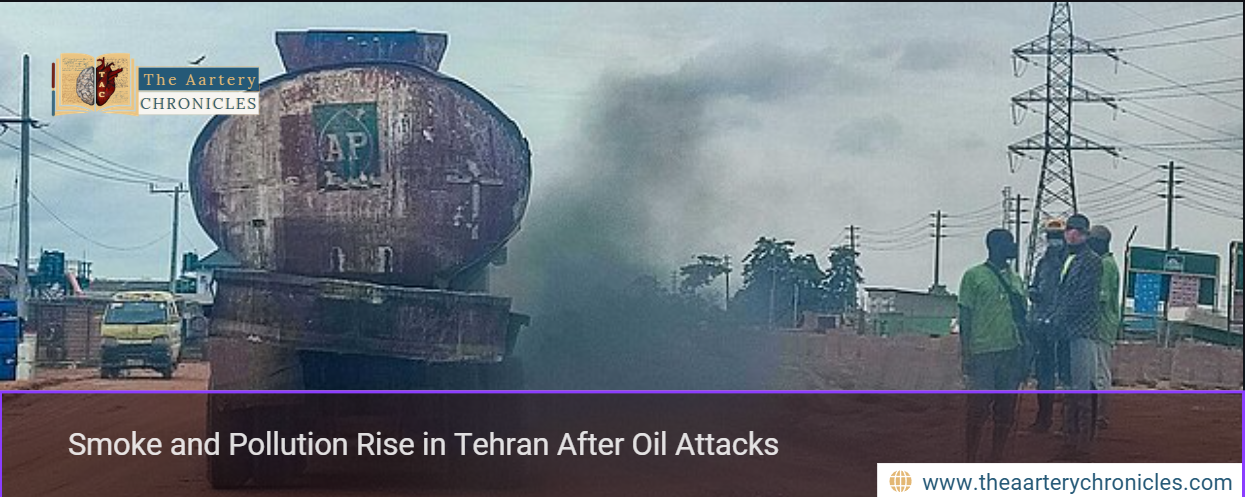
Residents of Iran’s capital are facing an alarming environmental and health crisis as acid rain in Tehran becomes a growing concern following recent attacks on oil storage facilities. Thick smoke and heavy soot now blanket the city, forcing authorities to urge people to remain indoors and limit exposure to polluted air.
Many residents reported waking up on Sunday morning not to sunlight, but to severe coughing and breathing discomfort. Instead of clear skies, large parts of Tehran appeared dark under a dense cloud of smoke.
Health experts warn that the pollution from burning fuel sites could increase respiratory problems and may even lead to acid rain formation if toxic gases mix with moisture in the atmosphere.
Oil depot strikes trigger massive smoke and pollution
The situation developed after the Israel Defense Forces targeted several Iranian fuel sites on Saturday, March 7. These included oil storage depots located around Tehran.
According to Israeli officials, the facilities were used by Iran’s military to support operational infrastructure. The Israeli military stated that the depots supplied fuel to different sectors, including military operations inside the country.
These strikes mark the first direct attacks on Iran’s energy infrastructure since the conflict between the United States, Israel, and Iran escalated on February 28.
As a result, large oil fires erupted, releasing enormous amounts of smoke and soot into the atmosphere. Within hours, the pollution spread across Tehran, reducing visibility and worsening air quality.
Why acid rain in Tehran is now a serious concern
Environmental specialists explain that burning oil releases gases such as sulfur dioxide and nitrogen oxides. When these gases mix with moisture in the air, they can form acidic compounds that fall back to the ground as acid rain.
Because of the ongoing fires and thick pollution, experts fear that acid rain in Tehran could occur if weather conditions allow these chemical reactions to develop in the atmosphere.
Acid rain can damage buildings, contaminate water sources, and harm crops. More importantly, it can worsen respiratory and skin problems, particularly in children, older adults, and people with asthma.
Doctors warn that prolonged exposure to polluted air from oil fires may cause symptoms such as coughing, throat irritation, eye burning, headaches, and breathing difficulty.
Residents told to stay indoors as health risks rise
Iranian authorities have advised residents to stay indoors as much as possible while the smoke continues to spread across the capital.
Health officials recommend several precautions including
• keeping windows closed
• using masks or air filters if available
• avoiding outdoor exercise
• seeking medical help if breathing symptoms worsen
Hospitals may also see an increase in respiratory complaints if pollution levels remain high.
Medical experts note that people with asthma, chronic lung disease, or heart conditions should be especially cautious during this period.
Oil market shock as global crude prices jump
While the environmental crisis unfolds in Tehran, the attacks have also affected global oil markets.
Crude oil prices surged sharply after the strikes. The price of a barrel jumped to 114 dollars, which represents a 23 percent increase from Friday’s closing price of 92.69 dollars.
Analysts believe disruptions to Iran’s oil infrastructure could create uncertainty in global energy supplies if the conflict continues.
Conclusion
For many residents, the immediate concern remains the dark skies and polluted air surrounding them. The possibility of acid rain in Tehran adds another layer of anxiety for people already coping with war related disruptions.
Health experts emphasize that monitoring air quality and protecting vulnerable populations will be critical in the coming days as the environmental impact of the oil fires becomes clearer.
Source: Inputs from various media Sources

I’m a pharmacist with a strong background in health sciences. I hold a BSc from Delhi University and a pharmacy degree from PDM University. I write articles and daily health news while interviewing doctors to bring you the latest insights. In my free time, you’ll find me at the gym or lost in a sci-fi novel.
- Priya Bairagi
- Health News and Updates,People Forum
- 12 March 2026
- 09:00