
Polyphenol Diet: A Proven Boost for Heart Health
Summary: Scientists have discovered that regularly eating polyphenol-rich foods such as tea, coffee, berries, nuts, whole grains, cocoa, and olive oil may significantly improve long-term heart health. A decade-long study tracking more than 3,100 adults found that people with higher polyphenol intake had healthier blood pressure, improved cholesterol levels, and lower predicted cardiovascular risk. Urine metabolite analysis confirmed the heart-protective effects of flavonoids and phenolic acids. A new polyphenol dietary score further strengthened evidence that whole-food eating patterns, rather than isolated compounds, play a crucial role in preventing cardiovascular disease as we age.
Scientists Reveal a Powerful Heart Boost Hidden in Everyday Foods
Why are researchers calling everyday foods like berries, coffee, and nuts a “natural heart protection system”?
A major long-term study has uncovered compelling evidence that polyphenol-rich foods may play a critical role in reducing cardiovascular risk. This article explains what polyphenols are, how they support heart health, and what the latest research reveals about their long-term benefits.
Polyphenol-rich foods including tea, coffee, berries, cocoa, whole grains, nuts, and olive oil, may significantly support heart health, according to a decade-long study involving more than 3,100 adults. Researchers found that people who regularly consumed diets high in polyphenols experienced healthier blood pressure, better cholesterol profiles, and a slower rise in cardiovascular disease (CVD) risk as they aged. These findings highlight how simple dietary habits can contribute to long-term heart protection
Polyphenols: The Plant Compounds That Protect Your Heart
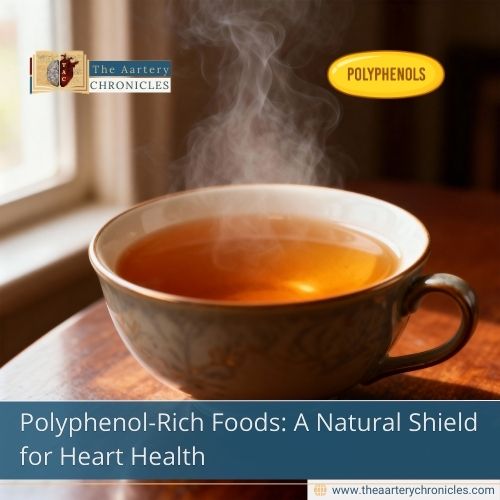
Polyphenols are naturally occurring compounds found in plant-based foods. They are widely known for their antioxidant and anti-inflammatory effects, supporting the heart, brain, and gut.
Common sources include:
- Tea and coffee
- Berries and cocoa
- Nuts
- Whole grains
- Extra virgin olive oil
These foods are easily available and can be incorporated into most diets.
A Decade-Long Study Reveals Powerful Heart Benefits
A research team from King’s College London followed more than 3,100 adults from the TwinsUK cohort for over ten years. Their analysis revealed that individuals with higher polyphenol intake had:
- Healthier blood pressure levels
- Improved cholesterol profiles
- Lower predicted CVD risk scores
This is one of the largest and longest studies to explore how polyphenol intake affects cardiovascular health over time.
Metabolite Analysis Confirms the Heart-Protective Effect
In a scientific first, researchers also measured urine metabolites, biomarkers that appear when the body processes polyphenols.
They found that participants with higher concentrations of polyphenol metabolites, especially flavonoids and phenolic acids:
- Had lower cardiovascular risk scores
- Showed higher HDL (“good”) cholesterol
This biochemical confirmation strengthens the link between polyphenols and long-term heart protection.
A New Polyphenol Dietary Score Improves Accuracy
To measure eating patterns more precisely, scientists developed a Polyphenol Dietary Score (PPS). This score assessed the intake of 20 common polyphenol-rich foods in the UK.
The PPS showed stronger associations with heart health than estimating total polyphenol levels.
Researchers believe this is because:
- Whole dietary patterns matter more than single nutrients
- Polyphenols interact with other food components
- The body absorbs these compounds differently depending on the food source
In short, it’s not just what you eat, but how consistently you eat it.
What the Experts Say
Professor Ana Rodriguez-Mateos, senior author, stated:
“Our findings show that long-term adherence to polyphenol-rich diets can substantially slow the rise in cardiovascular risk as people age. Even small, sustained shifts towards foods like berries, tea, coffee, nuts, and whole grains may help protect the heart over time.”
Dr. Yong Li, first author, added:
“This research provides strong evidence that including polyphenol-rich foods in your diet is a simple and effective way to support heart health. These plant compounds are widely available in everyday foods, making this a practical strategy for most people.”
Why Polyphenols are important Even More as We Age
Cardiovascular risk naturally rises with age. However, participants with higher polyphenol intake experienced:
- A slower increase in risk over the 11-year follow-up
- Better protection against age-related changes in blood pressure
- Improved cholesterol stability
Researchers recommend future intervention trials to further explore these findings.
Conclusion: Small Daily Choices, Big Heart Benefits
The study reveals a powerful message: You don’t need exotic supplements; your heart thrives on everyday plant foods.
Decades of research now show that polyphenol-rich foods are a simple, accessible, and powerful way to support long-term heart health. From tea and coffee to berries, nuts, and whole grains, these foods can slow age-related cardiovascular risk and improve cholesterol and blood pressure over time.
To protect your heart, start by adding just one or two polyphenol-rich foods to your meals daily small changes can deliver big benefits.

Dane
I am an MBBS graduate and a dedicated medical writer with a strong passion for deep research and psychology. I enjoy breaking down complex medical topics into engaging, easy-to-understand content, aiming to educate and inspire readers by exploring the fascinating connection between health, science, and the human mind.