
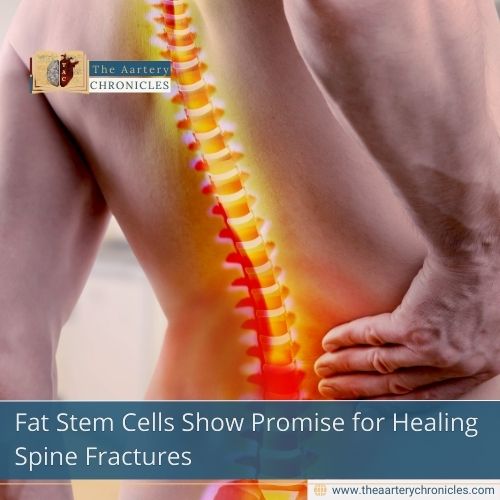
New Spine Healing Technique Uses Fat Stem Cells
Summary:
- A groundbreaking study from Osaka Metropolitan University shows that fat-derived stem cells (ADSCs) can heal spinal fractures and restore bone strength in rats.
- These stem cells are easy to obtain even from older adults, making them a promising, low-burden treatment for osteoporosis-related fractures.
- Osteoporosis affects 15+ million people in Japan, with spinal compression fractures being the most common and severely life-limiting.
- Researchers created bone-differentiated ADSC spheroids and combined them with β-tricalcium phosphate for treating osteoporotic vertebral fractures in rats.
- The therapy boosted bone regeneration, improved mechanical strength, and activated bone-repair genes.
- Experts involved, including Yuta Sawada and Dr. Shinji Takahashi, say the treatment is simple, safe, and potentially life-extending for future patients.
Fat Stem Cells Heal Broken Spines: Breakthrough Study Reveals Powerful Bone-Regenerating Potential
Can stem cells from body fat reverse bone loss and repair fragile spines?
A groundbreaking study suggests yes, opening the door to safer, less-invasive treatments for millions living with osteoporosis. In this article, you’ll learn how fat-derived stem cells (ADSCs) restored bone strength in rats with spinal fractures, and why this discovery could shape the future of bone health.
The Growing Crisis: Osteoporosis May Soon Affect Over 15 Million People
Osteoporosis silently weakens bones and dramatically increases fracture risk. In Japan, where the population is rapidly aging, the number of osteoporosis patients is expected to exceed 15 million. Among all osteoporosis-related injuries, spinal compression fractures, medically known as osteoporotic vertebral fractures, occur most frequently.
These fractures are not only painful but often require prolonged care and severely impact quality of life. The urgent need for better, safer treatments has pushed scientists to explore innovative tools, including stem cells from an unexpected source: body fat.
Why Fat-Derived Stem Cells Are Important
Researchers from Osaka Metropolitan University investigated how adipose-derived stem cells (ADSCs), stem cells taken from fat, can repair spinal fractures in rats. These fractures were designed to mimic those commonly seen in humans with osteoporosis.
Why ADSCs Are Unique
- They are easy to collect, even from older adults.
- Harvesting them places minimal strain on the donor.
- They are multipotent, meaning they can transform into different types of cells, including bone-forming cells.
This makes ADSCs a promising, patient-friendly option for treating degenerative bone conditions.
How Scientists Turned Fat Cells Into Bone Builders
Bone-Differentiated ADSC Spheroids
To enhance the healing abilities of ADSCs, researchers organized them into three-dimensional spheres, or spheroids. These spheroids were then guided toward turning into osteogenic (bone-forming) cells.
Studies have shown that when ADSCs grow in these 3D structures, their tissue repair abilities increase significantly
Inside the Rat Study: Testing a New Cell-Based Therapy
Graduate School of Medicine student Yuta Sawada and Dr. Shinji Takahashi led the research team. They generated bone-differentiated ADSC spheroids and combined them with β-tricalcium phosphate, a common material used in bone reconstruction procedures.
This cell-material combination was then applied to rats with osteoporotic vertebral fractures. The results were striking:
- Bone strength was significantly improved eight weeks after treatment.
- Spinal bone regeneration increased noticeably.
- Genes linked to bone healing and repair were more active than before.
Visual assessments and histological tests showed that the treated bones displayed greater structural integrity compared to untreated fractures
Expert Opinions: Safe, Simple, and Patient-Friendly
Sawada highlighted the therapeutic value of the approach:
“This study has revealed the potential of bone differentiation spheroids using ADSCs for the development of new treatments for spinal fractures. Since the cells are obtained from fat, there is little burden on the body, ensuring patient safety.”
Dr Takahashi emphasised the real-world implications:
“This simple and effective method can treat even difficult fractures and may accelerate healing. This technique is expected to become a new treatment that helps extend the healthy life of patients.”
What This Breakthrough Means for the Future of Bone Health
This research suggests that fat-derived stem cells may soon offer a minimally invasive, highly effective solution for spinal fractures, especially those caused by osteoporosis. With aging populations worldwide and millions at risk, such innovations could transform care delivery and significantly improve quality of life.
Conclusion: A Promising Step Toward Regenerative Bone Medicine
Fat-derived stem cell therapy is emerging as a powerful contender in bone healing research. By demonstrating restored bone strength and activated healing pathways in animal models, this study lays the foundation for future human therapies.
If fat stem cells can reliably heal fractured spines, we may be entering a new era of safe, accessible, regenerative bone treatments.
Dane
I am an MBBS graduate and a dedicated medical writer with a strong passion for deep research and psychology. I enjoy breaking down complex medical topics into engaging, easy-to-understand content, aiming to educate and inspire readers by exploring the fascinating connection between health, science, and the human mind.