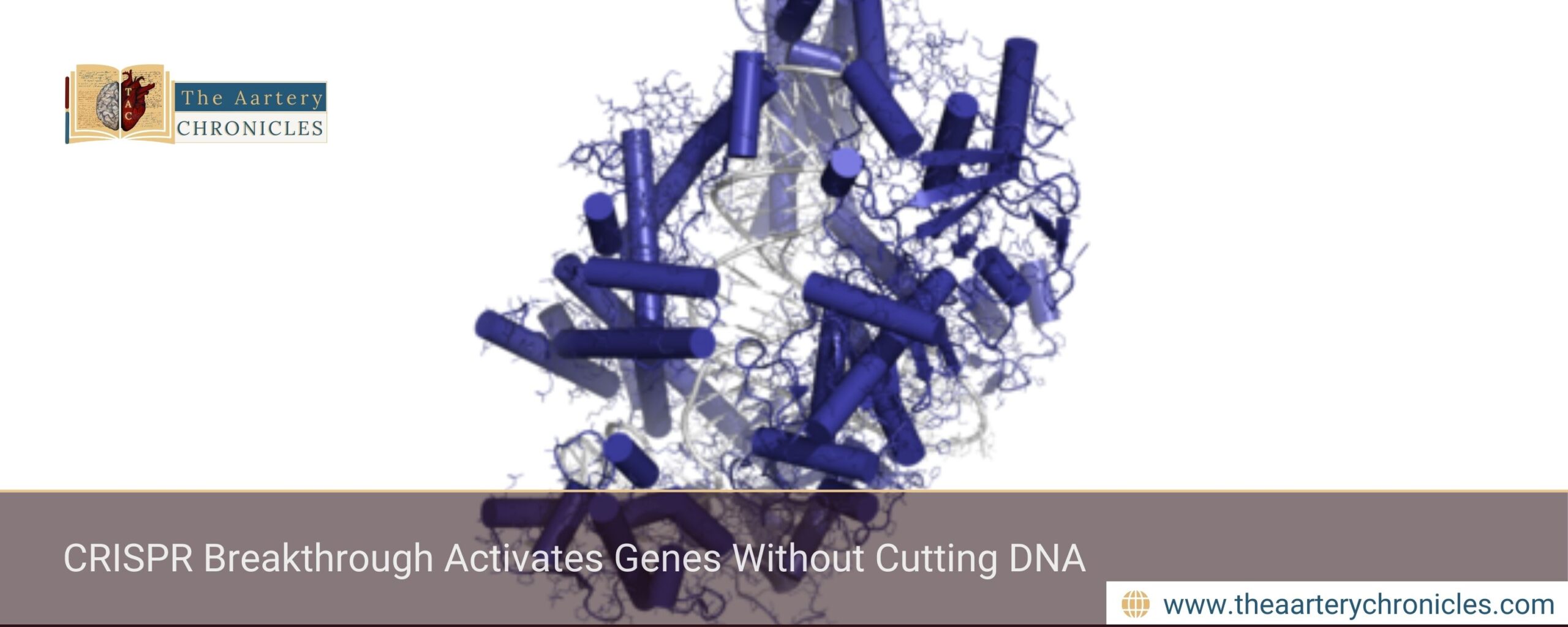

CRISPR Breakthrough Activates Genes Without Cutting DNA
Summary: Scientists have developed a groundbreaking CRISPR technique that can switch genes back on without cutting DNA. By removing chemical tags called methyl groups, researchers confirmed these markers actively silence genes. This safer form of epigenetic gene editing could revolutionize treatment for genetic disorders like sickle cell disease, reducing cancer risk and unintended side effects linked to traditional CRISPR methods.
A CRISPR Breakthrough That Changes Genetic Medicine
What if genes could be switched back on without cutting DNA at all?
A new CRISPR breakthrough shows that scientists can now reactivate silenced genes by removing chemical tags that act like molecular anchors, opening the door to safer, more precise gene therapies. This article explains how the discovery works, why it matters, and how it could transform treatment for sickle cell disease and beyond.
A Safer CRISPR Breakthrough Emerges
Scientists at UNSW Sydney, in collaboration with researchers from St Jude Children’s Research Hospital in Memphis, have developed a gentler form of CRISPR technology that could significantly improve the safety of gene therapy.
Unlike earlier CRISPR approaches that relied on cutting DNA strands, this method works by editing the epigenome, the chemical layer that controls whether genes are switched on or off.
The findings also resolve a long-standing scientific debate about whether chemical tags on DNA merely appear where genes are inactive or actively suppress gene activity.
Do Chemical Tags Silence Genes? The Debate Is Settled
For decades, scientists have questioned the role of DNA methylation, a process where small chemical clusters called methyl groups attach to DNA.
Were these methyl groups simply harmless markers found near inactive genes?
Or were they the actual cause of gene silencing?
In a study published in Nature Communications, the research team demonstrated that removing methyl groups reactivated genes, while adding them back switched the genes off again, providing direct proof that methylation controls gene expression.
“We showed very clearly that if you brush the cobwebs off, the gene comes on,” says study lead author Professor Merlin Crossley, UNSW Deputy Vice-Chancellor Academic Quality.
“And when we added the methyl groups back to the genes, they turned off again. So, these compounds aren’t cobwebs — they’re anchors.”
How CRISPR Technology Has Evolved
CRISPR, or Clustered Regularly Interspaced Short Palindromic Repeats, underpins modern gene-editing science. Originally derived from a bacterial defense system, CRISPR allows scientists to locate and manipulate specific DNA sequences.
Earlier CRISPR Generations
- First-generation CRISPR cuts DNA to disable faulty genes
- Second-generation tools corrected individual genetic letters
- Both approaches involved breaking DNA strands, increasing the risk of unintended mutations and cancer
The Epigenetic Editing Advantage
The latest evolution, epigenetic CRISPR editing, avoids DNA cuts altogether. Instead, it targets chemical markers inside the cell nucleus, allowing genes to be turned on or off without altering the DNA sequence itself.
Turning Genes Back On Without Cutting DNA
This new technique uses a modified CRISPR system to deliver enzymes that remove methyl groups from silenced genes. Once these chemical “brakes” are released, gene activity resumes naturally.
Crucially, the underlying DNA remains untouched, dramatically reducing the risk of dangerous side effects.
New Hope for Treating Sickle Cell Disease
The researchers believe this approach could be transformative for sickle cell disease, a group of inherited blood disorders that distort red blood cells and cause severe pain, organ damage, and reduced life expectancy.
“Whenever you cut DNA, there’s a risk of cancer. And if you’re doing a gene therapy for a lifelong disease, that’s a bad kind of risk,” Prof. Crossley explains.
“But if we can do gene therapy that doesn’t involve snipping DNA strands, then we avoid these potential pitfalls.”
Why the Fetal Globin Gene Matters
The team focused on reactivating the fetal globin gene, which helps transport oxygen during fetal development. In healthy individuals, this gene is typically switched off after infancy. Reactivating it in adults could compensate for defective adult globin genes responsible for sickle cell disease.
“You can think of the fetal globin gene as the training wheels on a kid’s bike,” says Prof. Crossley.
“We believe we can get them working again in people who need new wheels.”
What the Research Shows So Far
All experiments have been conducted in laboratory settings using human cells at UNSW and St Jude. Despite being early-stage, the results suggest broad therapeutic potential.
Study co-author Professor Kate Quinlan emphasises that epigenetic editing could extend beyond blood disorders.
“We are excited about the future of epigenetic editing as our study shows that it allows us to boost gene expression without modifying the DNA sequence. Therapies based on this technology are likely to have a reduced risk of unintended negative effects compared to first or second generation CRISPR,” she says.
How This Therapy Could Work in Patients
In future clinical applications, doctors could:
- Collect a patient’s blood stem cells
- Use epigenetic CRISPR editing to remove methyl tags from the fetal globin gene
- Return the edited cells to the patient
- Allow them to repopulate the bone marrow and produce healthier red blood cells
This strategy avoids permanent DNA damage while delivering long-lasting benefits.
The Next Steps in Epigenetic Editing
The research teams plan to:
- Test the approach in animal models
- Explore additional CRISPR-based epigenetic tools
- Investigate other chemical modifications beyond methylation
“Perhaps the most important thing is that it is now possible to target molecules to individual genes,” Prof. Crossley says.
“Here we removed or added methyl groups but that is just the beginning.”
Conclusion: A Turning Point for Safer Gene Therapy
This CRISPR breakthrough marks a critical shift in genetic medicine, activating genes without cutting DNA. By proving that methyl groups actively silence genes, scientists have unlocked a safer, more controllable path to treating inherited disorders like sickle cell disease.
As epigenetic editing advances, it holds promise for powerful therapies with fewer unintended side effects, potentially reshaping the future of gene-based treatments.
Dane
I am an MBBS graduate and a dedicated medical writer with a strong passion for deep research and psychology. I enjoy breaking down complex medical topics into engaging, easy-to-understand content, aiming to educate and inspire readers by exploring the fascinating connection between health, science, and the human mind.