
Can You Believe She’s 20 With No Brain?
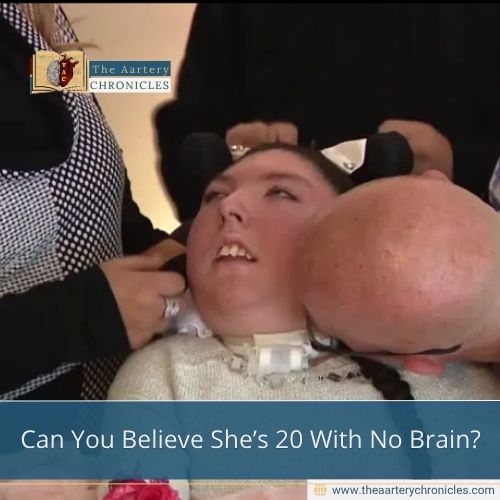
A US woman born without a brain has reached an incredible milestone, her 20th birthday, defying every medical expectation. Alex Simpson, from Omaha, Nebraska, was diagnosed with hydranencephaly, a rare and severe brain disorder. At birth, doctors warned her parents that she might not live beyond the age of four. Yet, two decades later, Alex continues to amaze her family and caregivers with her strength and will to live.
What Is Hydranencephaly?
Hydranencephaly is an uncommon neurological condition in which the cerebral hemispheres, the largest parts of the brain responsible for thinking, movement, and coordination, are missing and replaced by cerebrospinal fluid.
According to the Cleveland Clinic, this condition occurs in about 1 in 5,000 to 10,000 pregnancies and is usually fatal within the first year of life.
The disorder can develop due to stroke, infection, or damage to the fetal brain during pregnancy. Babies may appear healthy at birth but later show symptoms such as seizures, poor feeding, blindness, developmental delays, and slow growth. Because of these challenges, long-term survival is extremely rare.
Living With Only a Tiny Part of the Brain
Alex’s father, Shawn Simpson, told local station KETV that his daughter has “about half the size of my pinky finger of her cerebellum.” The cerebellum helps control movement and balance. Beyond this small portion, Alex has no functioning brain tissue.
Despite this, her family describes her as deeply aware of her surroundings. Though she cannot see or hear, Alex appears to sense emotions and physical discomfort in people nearby. Her 14-year-old brother, SJ, shared, “If someone around her is upset or in pain, she somehow feels it; it’s amazing.”
Love, Faith, and the Power of Care
The Simpsons believe that love and faith have played a crucial role in Alex’s remarkable survival. Her mother, Lorena Simpson, calls her “a fighter” and says their daughter responds to touch, tone, and presence even without traditional senses.
Her father adds, “Twenty years ago, we were terrified. But faith kept us going. Every day with her is a blessing.”
While hydranencephaly remains incurable, attentive care, strong family support, and adaptive medical management have helped Alex live far beyond medical expectations.
Conclusion
Reaching 20 years of age with hydranencephaly is extremely uncommon. Most children with the disorder do not survive past infancy. Alex’s story is not only a symbol of medical mystery but also a powerful example of human resilience, family devotion, and the enduring spirit of life.
Her journey continues to inspire both medical professionals and families around the world, reminding us that even when the brain is nearly absent, the heart and spirit can still shine powerfully.
Source: Inputs from various media Sources

I’m a pharmacist with a strong background in health sciences. I hold a BSc from Delhi University and a pharmacy degree from PDM University. I write articles and daily health news while interviewing doctors to bring you the latest insights. In my free time, you’ll find me at the gym or lost in a sci-fi novel.
- Priya Bairagi
- Health News and Updates,People Forum
- 13 November 2025
- 15:00