
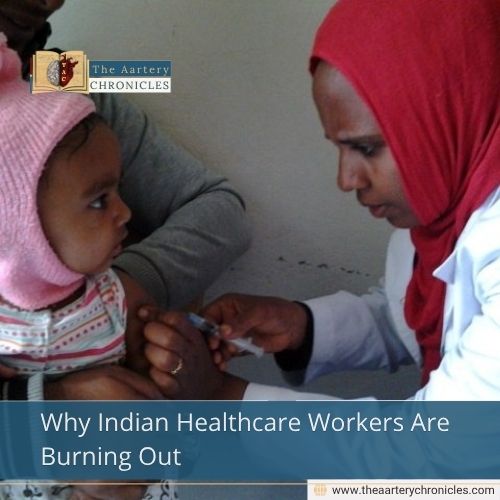

Why Indian Healthcare Workers Are Burning Out
Summary:
India’s healthcare workers are exhausted. Recent surveys say 83% feel mentally drained, and half end up working more than 60 hours a week. Women and people in rural clinics are hit even harder, with burnout rates climbing to 87% and 85%. Doctors juggle way too many patients, there’s just one doctor for every 1,457 people. On top of that, 75% deal with violence at work, paperwork swallows over a third of their shifts, and clinics in poor areas barely keep it together.
There’s some hope, though. Resilience makes a difference, an average score of 3.2 out of 5 on resilience scale drops burnout risk by almost a third. The fixes come in all shapes and sizes. Some stick to personal routines, like taking short pranayama breaks, which can cut exhaustion by a quarter. Others look at big policy changes, like Kerala’s staffing reforms, which reduced burnout rates in half.
India’s healthcare workers are under constant pressure, and it shows. Burnout isn’t a distant issue, it’s right here from emotional exhaustion, to feeling detached from work, and a nagging sense that nothing you do matters. The stats back it up: between 42% and 83% of healthcare workers are burned out. And this isn’t just their problem, it rolls downhill and puts patients in danger too.
So, what’s driving all this burnout? And what does it really take to turn things around?
The Burnout Numbers
It’s tough out there. In a massive 2025 survey of Indian doctors, 83% said they feel mentally drained. Roughly half work for more than 60 hours every week, with 15% going over 80 hours. The Copenhagen Burnout Inventory paints a bleak picture too, 68% are burned out overall. That breaks down to 67.5% for work, 56.4% for personal life, and 48.6% for dealing with patients.
Women seem to bear the burden even more, around 87% report exhaustion, compared to 77% of men. Junior doctors and those outside big cities are especially hard-hit. In small towns, 85% are worn out, which is 11% higher than metro doctors. In public hospitals, one doctor cares for 1,457 patients. That’s three times the World Health Organization’s recommendation.
But these aren’t just abstract figures. They mean packed waiting rooms, doctors buried under paperwork, and emotional weight that never lets up.
Why Burnout Is So High
1. Relentless Workload:
Picture an outpatient department in a government hospital. Some days, each doctor sees 50, maybe 100 patients. Long hours, hardly a real break. It wears you down.
2. Violence at Work : Aggression isn’t rare, three out of four doctors have faced it from patient’s families. That doesn’t just hurt physically. It makes people anxious, builds distrust, and leaves scars.
3. Administrative Overload: Doctors spend more than a third of their shift i.e 36% just handling paperwork. All that time stuck with forms, that’s time taken from the patients who actually need help.
4. Geographic Struggles: If you work in a smaller city or rural area, the job gets even harder because the resources are tighter, and support systems are thin. In these areas, 85% report serious fatigue.
And it all stacks up. A quarter of healthcare workers deal with every kind of burnout at once. Attrition hovers around 30%, and a huge majority, over 90%, would rather see their family steer clear of medicine.
The Power of Resilience
Resilience matters. It isn’t about being unbreakable; it’s about bouncing back once things get rough. Indian healthcare workers average 3.2 out of 5 on resilience scales, and that small edge can cut their chances of burning out by up to 30%. Sure, things like family support and cultural grit help, but having real strategies in place makes more difference.
Bottom line: resilient workers make fewer mistakes, stick with the job longer, and deliver better care.
Practical Solutions
What actually helps? Here’s what’s proven to make a difference, starting with things you can do on your own, then teams and systems can step up too.
1. Personal Habits (Small Changes, Big Impact)
– Take breathing breaks. Just five minutes of pranayama between patients can drop exhaustion by 25%.
– Track your energy. Rate your fatigue, between 1 to 10, every day. You’ll spot burnout earlier.
– Set limits. No paperwork after 8 PM. Protect that boundary.
2. Team Support (You’re Not Alone)
– Try peer check-ins. Just 15 minutes a week with your team can make isolation drop by 40%.
– Buddy up. Have one colleague you touch base with regularly. It makes tough days less lonely.
3. System Fixes (Healthier Workplaces)
– Kerala enforced better doctor-patient ratios and burnout rates got cut in half.
– Tamil Nadu started wellness centers and saw burnout symptoms fall by almost 20%.
– Digital health records (like ABHA) freed up 20% of admin time, turning focus back to patients.
A Simple Roadmap
Week 1: Keep it easy.
– Download a meditation or breathing app; use it twice a day.
– Record how you’re feeling each day.
– Pick one friend at work to check in with.
Month 1: Build your network.
– Schedule weekly peer check-ins.
– Share what you’ve learned with colleagues.
– Suggest one digital tool for the team to try.
6 Months: Go bigger
– Push for a wellness officer in your workplace.
– Rally around better doctor-patient ratios.
– Join or start a hospital improvement group.
Quick checklist:
– Daily five-minute breathing break.
– Weekly fatigue score check-in.
– Regular team support.
– No work after 8 PM.
– Try a digital admin tool.
Better for Patients Too
When doctors are burned out, mistakes jump by 20%, and people quit faster. This means patients wait longer and get less care. But when workers feel supported and have more resilience, they catch problems sooner and build trust with patients. Every small change helps.
What Needs to Change
India’s two million healthcare workers keep the whole system running, but with about 30% ready to call it quits, something must be amiss. Evidence-based changes can boost things by up to 50%.
What matters most?
1. Capping the workweek at 48 hours, plus proper overtime pay.
2. Tougher laws that actually protect doctors from violence, with fast legal action.
3. Solid mental health support for everyone on staff.
Some places are already on the move, Kerala tightened up staffing, Tamil Nadu’s wellness programs are spreading, and digital systems are coming in.
Moving Forward
Burnout feels overwhelming, but change is possible. Something as simple as a daily breath break lowers exhaustion. Team check-ins cut loneliness nearly in half. And bigger system changes keep people in the profession for years.
Healthcare workers deserve jobs that don’t break them. Patients deserve professionals who are present and energized. We can get there, step by step, starting now.
So take a five-minute breathing break today. That little act could start something bigger than you realize.

- Dr Yashvi Singh
- Dentistry,Public Health
- 24 March 2026
- 18:00
Reviewed by Dr Aarti Nehra (MBBS, MMST), & Dr Darshit Patel (MBBS)