
The Hidden Emotional Cost of Being a Surrogate
The emotional toll of surrogacy is often overlooked, even as more families turn to this pathway to parenthood. A Canadian mother-of-five has shared her experience to shed light on the psychological and physical challenges surrogates can face, especially when they lack strong day-to-day support.
Her story underscores a growing public health conversation: while surrogacy can be deeply meaningful, it can also bring isolation, emotional strain, and unmet mental health needs for the women who carry pregnancies for others.
Choosing Surrogacy to Help Others
In 2019, Dawn Wickhorst, a photographer and foster parent from Alberta, Canada, chose to become a surrogate after learning how common infertility is among couples. Having completed several healthy pregnancies of her own and not planning more children, she felt her body could help others build families.
Over time, she carried pregnancies for two different couples, including a same-sex male couple, completing the process altruistically. In Canada, paying surrogates is illegal, meaning she received no financial compensation beyond expenses.
Feeling Essential but Excluded
Despite being central to the process, Dawn described feeling emotionally sidelined. While intended parents prepared for their new child, she often attended medical appointments alone and returned home to care for her children while managing pregnancy symptoms.
She explained that surrogates may feel caught between roles crucial to the pregnancy, yet not part of the family unit. This emotional distance, combined with physical discomfort, made surrogacy heavier than she expected.
Isolation During Pregnancy
As a single mother, Dawn had no partner at home to help during difficult days. Nausea, back pain, and fatigue were common, yet there was an unspoken pressure to cope quietly because surrogacy was a voluntary choice.
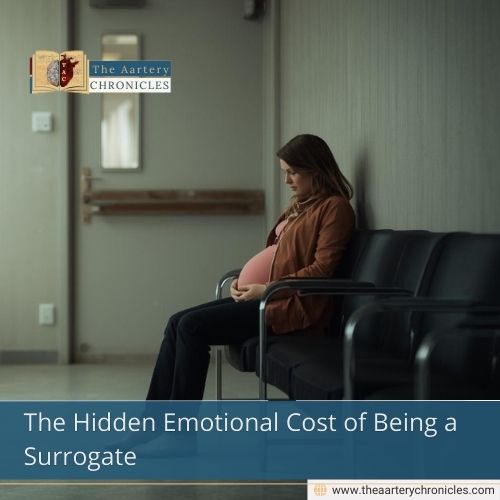
She recalled moments of sitting alone in clinic waiting rooms, processing complex emotions without space or time to recover before returning to daily responsibilities. According to her, loneliness, not childbirth, was the hardest part of the journey.
Public Attention on Parents, Not Surrogates
Dawn’s experience contrasts with the public narrative around surrogacy, which often centers on intended parents. High-profile figures such as Meghan Trainor and her husband Daryl Sabara have spoken openly about welcoming children via surrogates for medical reasons.
Other celebrities, including Kim Kardashian, Paris Hilton, Priyanka Chopra, Nick Jonas, and Rebel Wilson, have shared joyful outcomes, yet the surrogate’s emotional experience is rarely discussed.
This imbalance, Dawn says, can unintentionally make surrogates feel invisible during a demanding medical process.
Birth, Letting Go, and Unexpected Grief
Contrary to common assumptions, Dawn said, handing the baby to the parents was not distressing. In fact, it was the most meaningful moment of the entire journey.
However, once the pregnancy ended, she experienced a different kind of grief. The sudden shift from months of purpose and preparation to an abrupt stop left her emotionally unsettled, highlighting another aspect of the surrogacy that is seldom addressed.
Why emotional health matters
Dawn encourages future surrogates to build strong emotional and practical support systems before beginning the process. Feeling lonely, she emphasized, does not mean regretting the decision; it means being human during a complex medical and emotional experience.
She also called for more formal services, such as counselling and peer support groups, to help protect surrogate mental health before, during, and after pregnancy.
Conclusion
Despite the challenges, Dawn does not regret becoming a surrogate. She described the experience as deeply purposeful and meaningful, and she went on to complete a second surrogacy in 2024.
After seven total pregnancies, however, she believes her body has reached its limit. Still, she hopes her story encourages better recognition of surrogacy and sparks broader discussion about mental health care for surrogates.
Surrogacy is not only a reproductive process but also a prolonged physical and psychological experience. As its use grows worldwide, integrating mental health screening, counselling, and community support into surrogacy care models is essential for the well-being of both surrogates and families.
Source: Inputs from various media Sources

Priya Bairagi
Copy-Writer & Content Editor
I’m a pharmacist with a strong background in health sciences. I hold a BSc from Delhi University and a pharmacy degree from PDM University. I write articles and daily health news while interviewing doctors to bring you the latest insights. In my free time, you’ll find me at the gym or lost in a sci-fi novel.
- Priya Bairagi
- Health News and Updates,People Forum
- 27 January 2026
- 12:28