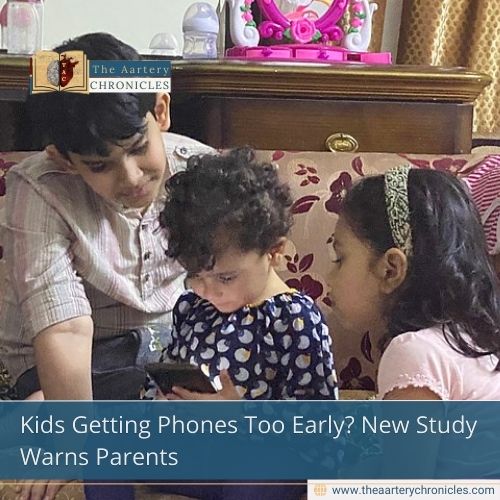

Kids Getting Phones Too Early? New Study Warns Parents
Growing concerns about early smartphone use in children are prompting parents and health experts to reassess the right age for introducing digital devices. While smartphones have become essential for learning and communication, new research suggests that giving children their own device too early, especially before age 12, may carry important health risks.
A collaborative study by the Children’s Hospital of Philadelphia, the University of California, Berkeley, and Columbia University has found that early access to smartphones is connected to increased physical and mental health problems during adolescence.
How Early Smartphone Use Affects Children’s Health
According to the study published in Paediatrics, children who own a smartphone by age 12 or younger face higher chances of experiencing:
- Mental health issues, including symptoms of depression
- Insufficient sleep, which is critical for healthy brain development
- Higher obesity risk, partly due to reduced physical activity
The researchers emphasise that these effects were noticeably stronger among the youngest smartphone users. In other words, the earlier a child gets their own device, the greater the potential impact on sleep and emotional well-being.
Younger Kids Face Greater Sleep Disruptions
To understand these patterns, scientists examined data from more than 10,000 adolescents who participated in the US Adolescent Brain Cognitive Development (ABCD) Study between 2018 and 2020. It is the largest long-term study on child health and brain development in the country.
Their findings revealed that children under 12 who owned smartphones were significantly more likely to experience poor sleep than older smartphone users. Because sleep is closely tied to mood regulation and healthy growth, the researchers stress the need for greater caution before giving young children personal devices.
Smartphones Are Not All Harmful, But Require Thoughtful Use
Lead author Dr Ran Barzilay, a child psychiatrist at CHOP, highlights that smartphones themselves are not inherently harmful. Instead, their impact depends on how and when they are used.
He notes that smartphones can:
- Support learning
- Strengthen social connections
- Provide access to valuable information
- Enhance safety and communication within families
However, Dr Barzilay stresses the importance of weighing these benefits against possible health risks, especially when considering early smartphone use in children.
How Common Is Smartphone Use Among Kids?
Recent findings from the Pew Research Centre show how widespread smartphone ownership has become:
- 95% of teens (13–17 years) owned a smartphone in 2024
- 50% of kids aged 11–12 had their own devices
- Nearly 30% of children aged 8–10 used smartphones
- 12% of parents reported smartphone use in children aged 5–7
- Even 8% of children under 5 had access to a smartphone
These numbers indicate that children are receiving phones at increasingly younger ages often before they are emotionally prepared to manage them.
Screen Time Can Affect Family Relationships Too
Two additional studies from the University of Georgia found that increased screen use contributes to more family conflict. By age 11, children who frequently used screens experienced:
- More arguments with parents
- Greater criticism and tension at home
- Ongoing conflict into the teenage years
Lead researcher Cory Carvalho explains that early exposure to social media, often around age 10, intensifies emotional challenges that naturally occur during adolescence, leading to more disagreements and frustration within families.
Conclusion
All the studies point toward a common message: age 12 is generally too early for unsupervised smartphone ownership. However, if a family decides to introduce a smartphone after age 12, setting clear expectations becomes essential.
Experts recommend that parents:
- Create a family phone-use agreement outlining rules
- Set boundaries for device use during bedtime, mealtime, and homework
- Adjust privacy and content filters to block inappropriate material
- Ensure all caregivers follow the same rules consistently
- Encourage daily phone-free physical activity to support healthy sleep and weight
Prioritising structure and open communication can help minimise the risks associated with early smartphone use in children, while still allowing them to benefit from technology.
Source: Inputs from various media Sources

I’m a pharmacist with a strong background in health sciences. I hold a BSc from Delhi University and a pharmacy degree from PDM University. I write articles and daily health news while interviewing doctors to bring you the latest insights. In my free time, you’ll find me at the gym or lost in a sci-fi novel.
- Priya Bairagi
- Health News and Updates,People Forum
- 2 December 2025
- 13:00